

The digitalization of supermarkets, pharmacy chains, and large retail operations has historically been built on the logic of stacking channels. Companies maintained their in-store checkout terminals (POS) running on legacy infrastructure and built e-commerce websites completely disconnected from this physical reality.
The fragmented multichannel model worked as a stopgap for a while, but its operational efficiency has been exhausted. When the physical shelf and the virtual storefront do not communicate on the same real-time database, the operation is exposed to a sometimes invisible rupture: the customer buys a product on the website that has just been placed in someone else's in-store cart.
The financial result is immediate: canceled orders, acute customer dissatisfaction, refund costs, and lost productive hours in the manual picking of goods. For the executive, the conclusion is unavoidable: sustaining the operation by relying on separate systems guarantees daily logistical losses.
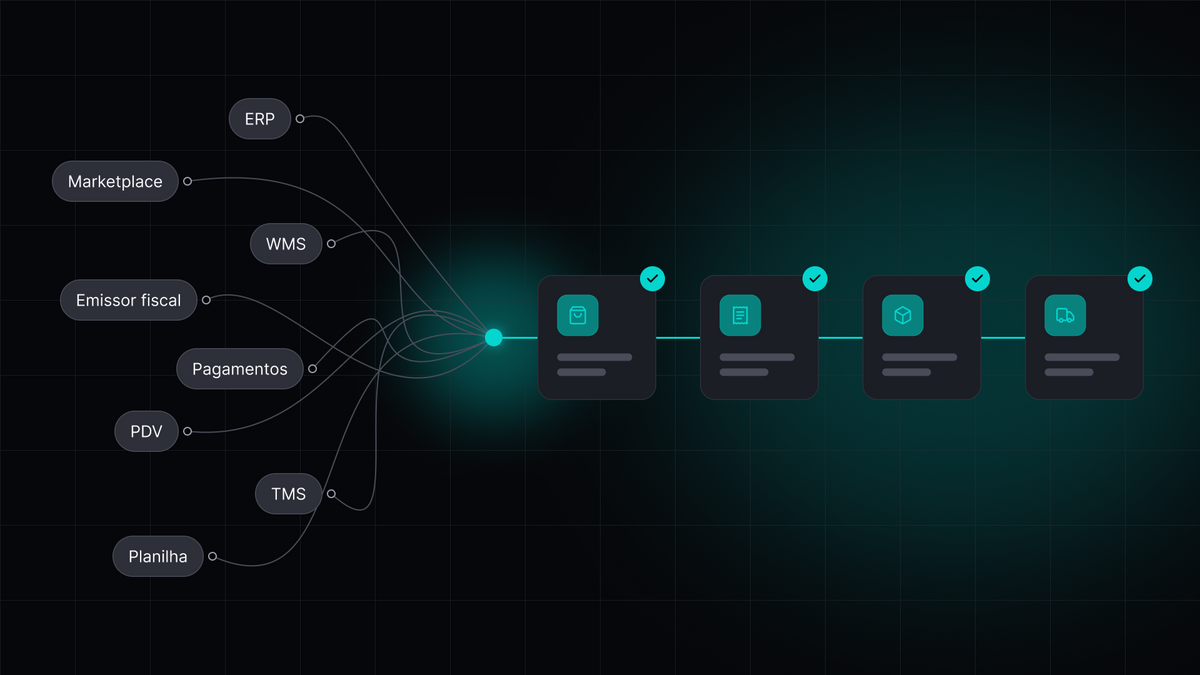
Healthy growth requires the adoption of unified commerce. It is not just about expanding the online offering, but about centralizing the systems architecture so that inventory, payment, and customer history run in a single flow, without boundaries between the counter and the internet.
The problem of a lack of data context
In the food and health segment, the expectation of delivery speed does not tolerate friction. The modern consumer demands to buy on the website and pick up the order in a few minutes, or receive supplies from the physical unit closest to their neighborhood.
Without a single source of truth in the data, the company multiplies its costs by trying to meet this demand:
Batch synchronization: parallel systems that update the e-commerce inventory only a few times a day break down against the speed of a supermarket, where a high volume of items passes through the checkout every minute.
History friction: a regular customer of the brick-and-mortar store enters the website and is treated as unknown, losing loyalty benefits and making targeted repurchase campaigns unfeasible.
Blind logistical routing: without a unified system that directs the online order to the correct physical store with guaranteed inventory, the travel cost for delivery ends up exceeding the profit of the cart itself.
From physical to digital without breaks
Overcoming the structural division of a traditional chain requires architectural precision and the elimination of redundant tools. The move made by the supermarket chain St. Marche illustrates the successful migration to unified commerce.
In the case of St. Marche, the transition from the physical counter to the internet required engineering solutions structured by the Distributed Retail Accelerator on the basis of Shopify Plus. We implemented dedicated pickup apps for the store team to pick perishable products, configured automated substitution flows for missing items, and transferred the customization of the shelf to the digital storefront, allowing the consumer to choose everything from the thickness of the meat cut to the type of coffee grind.
The order flow, the picking of goods in the aisle, and the inventory reading of each physical unit began to run under the same data environment. When the customer buys online, the system sees the reality of the store and processes the order without the barrier imposed by old disconnected software.
Unified data is the prerequisite for intelligence
Solving immediate logistics is only the first step. Unified commerce prepares the business structure to operate with artificial intelligence safely.
Many chains invest heavily in digital assistants to predict logistical ruptures or automate freight calculations. However, no digital intelligence can return precision if the data that feeds it is outdated or divided between the website and the physical POS.
Artificial intelligence only delivers real efficiency when it consults a single, consolidated inventory and consumption database. With integrated sales, agents begin to operate on the reality of each physical and digital unit at the same time, eliminating manual processes, correcting inventory failures, and returning the productive hours that the fragmented operation consumed to your team.
Sources
- Modern Retail, "Schnucks' new health-tracking AI assistant is a model for other retailers"
- Shopify Enterprise, "Unified Commerce in Retail: Business Case and Implementation"