
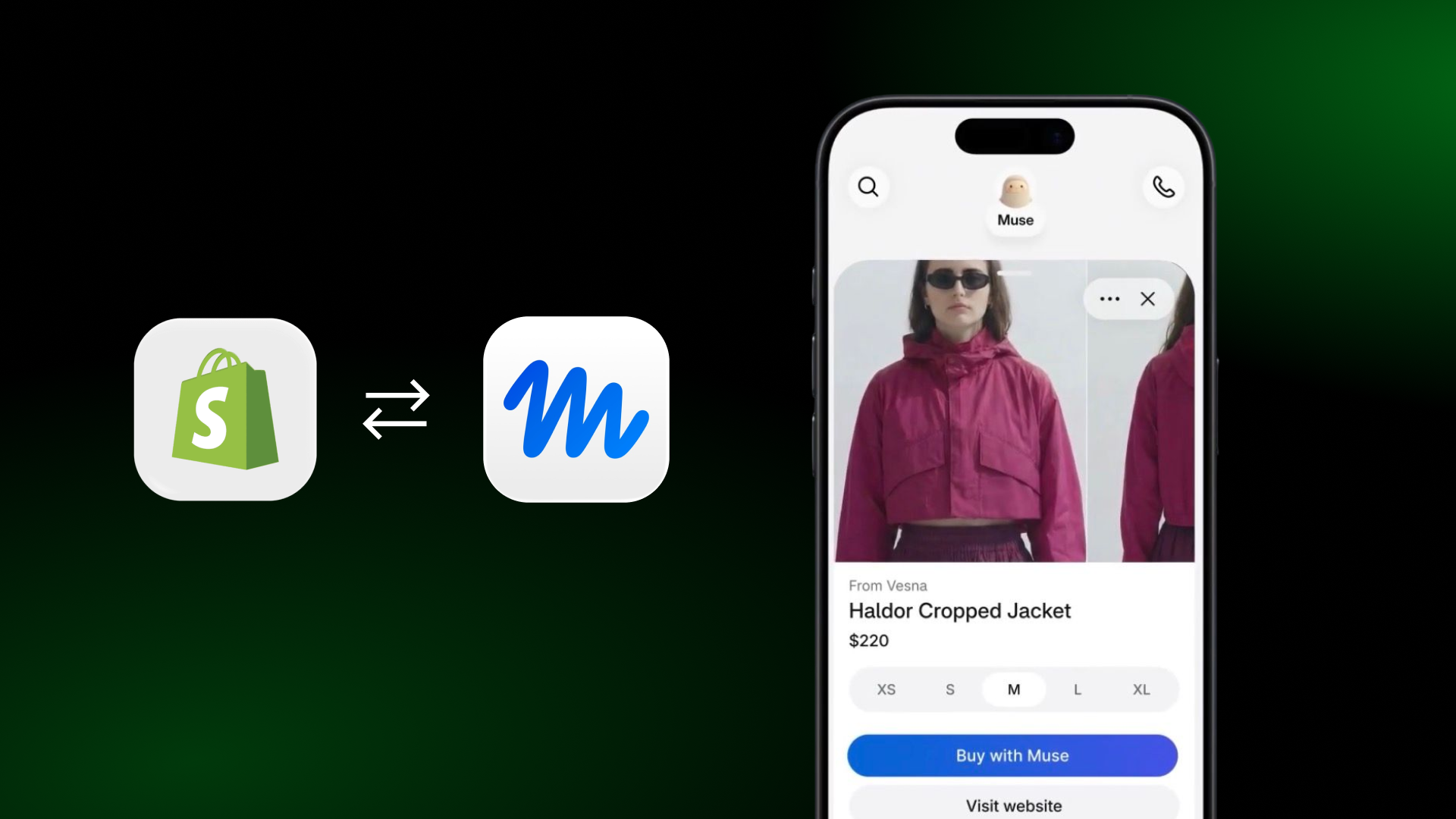
On September 8, Meta launched Muse: a personal AI agent that not only answers questions but also performs tasks on behalf of its users. It sends emails, makes reservations, fills out forms, negotiates, and—what matters most to online sellers—makes purchases.
On the same day, Shopify posted a direct message on its official profile:

Click to view the original post
For those of us who closely follow the Shopify ecosystem, this is not an isolated piece of news. It is confirmation of a move Shopify has been planning for months.
Why Shopify was already ready
In January of this year, Shopify announced the Universal Commerce Protocol (UCP), an open standard developed jointly with Google to allow any AI agent to transact with any merchant using a common language for carts, checkout, payment, and after-sales. The UCP was born with the endorsement of names such as Amazon, Mastercard, Microsoft, Stripe, Visa, and Meta itself.
The logic behind the protocol is simple and explains the speed of Muse's launch: when a new AI platform adopts the UCP, Shopify merchants are automatically ready to sell there, without the need for a custom integration. That is exactly what happened. Meta launched Muse, and Shopify was already on the other side, providing the product database and sales infrastructure, without waiting for any specific agreement.
This is what underpins the statement "Shopify merchants are already live". It is not a launch stroke of luck. It is the direct result of a structural bet made in advance.
What is already working, and the next chapter that is already on its way.
From day one, Shopify delivers the part that matters most: discovering the right product at the right time. When Muse searches for something to buy, it queries the Shopify Catalog in real time—the same database that already powers Shopify merchants' presence in ChatGPT, Gemini, and Copilot. It is the recommendation engine running inside the conversation, without the merchant having to lift a finger beyond keeping their catalog up to date.
And the next step is already on the radar: the Shopify-branded checkout. Today, payment within Muse goes through Stripe's Link, with a single-use card—a robust solution that has provided consumer purchase protection since launch. Shop Pay and the 1Password integration are expected to arrive very soon, bringing the same fast, familiar checkout experience that millions of buyers already use every day in Shopify stores around the world into Muse. It is the natural completion of the cycle: discovery, decision, and payment, increasingly unified under the same workflow.
And the timing could not be better to keep a close eye on it. Muse was launched this week and is currently available only in the United States. It is the beginning of a rollout, exactly the kind of window that makes sense to watch closely: given the size of Shopify's merchant base in Brazil and the strength the UCP already has in the ecosystem, the natural expectation is that this experience will arrive here soon, and when it does, the Brazilian catalog will already be ready to join in.
What this confirms about agentic commerce
It makes sense to add this piece to the others we have already been observing. In a short time, Shopify connected to ChatGPT, began supporting Microsoft's Copilot Checkout, announced direct sales within Google's AI Mode and Gemini, and now appears integrated with Meta's Muse on the exact day of its launch.
The pattern repeats: the AI agent changes, the model behind it changes, the company behind it changes, but the catalog and checkout structure that supports the sale remains the same.
This is Shopify's bet: to become the infrastructure layer that any AI agent needs to access to turn a conversation into a completed sale, whether that agent comes from Meta, Google, Microsoft, or whoever follows.
For those who sell online, the message is that the work of structuring a catalog—which many merchants still treat as a secondary task—has also become the work of appearing well, with the correct price, inventory, and return policy, inside a conversation the customer is having with an AI assistant, without ever having opened the store's website.
Agentic commerce is no longer a future thesis. It is becoming, conversation by conversation, increasingly consolidated. And we continue to closely monitor every move in this transition, because that is exactly where the next efficiency gain lies for those who sell.