
Artificial intelligence has transformed the daily routine of those who work with e-commerce. Accessible and free tools allow anyone to create eye-catching images on Bing, edit videos in Videoleap or Photoleap, create presentations in Beautiful.ai, and generate synthetic voiceovers in Fliki in just a few minutes. However, this same technology that makes it easier to create marketing content has opened the door to an unprecedented challenge in online store management.
Behind the scenes of the internet, digital browsing has reached a new level: the volume of traffic from bots and artificial intelligence agents has surpassed that of real people on the worldwide web. This shift has raised an alarm in the global information security market, driving billions in investments in companies specializing in identifying automated access, such as the $200 million funding raised by Spur, and in protecting corporate networks against the misuse of digital agents, exemplified by the $1 billion acquisition of Oasis Security by Cyera.
For those who run an e-commerce business daily, the most direct impact of this technological evolution is happening in after-sales: the proliferation of fake receipts, photos, and evidence generated by artificial intelligence to forge refunds.
The Invisible Side: How AI Is Being Used to Simulate Defects and Forge Refunds
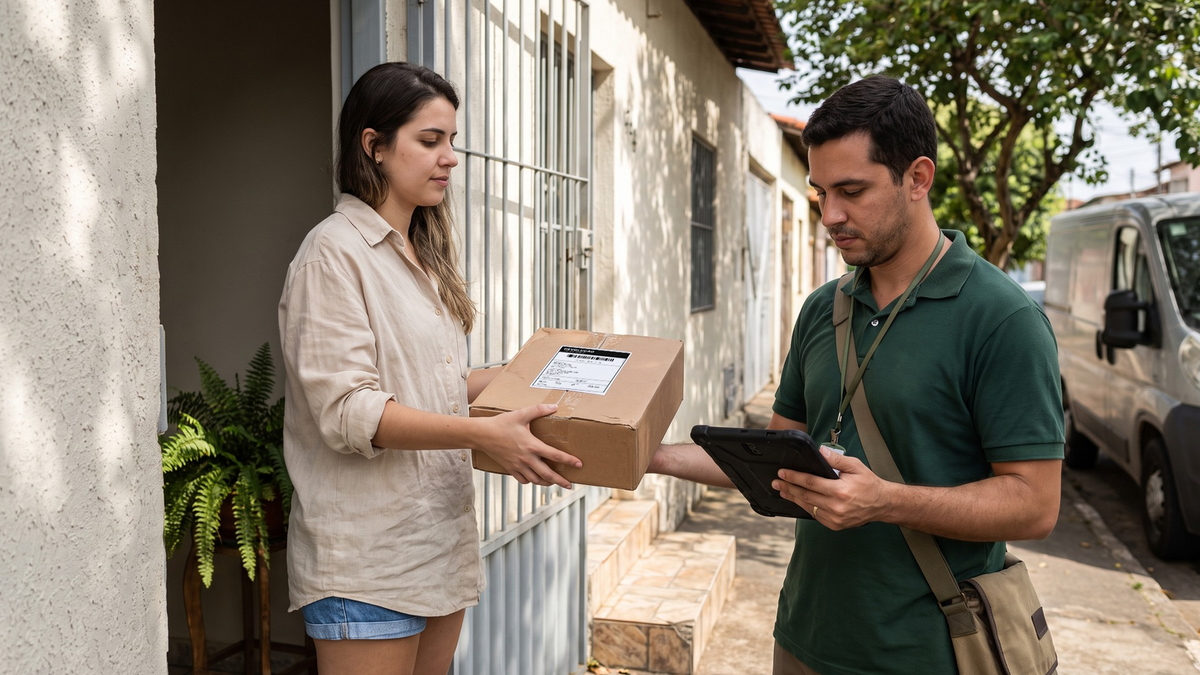
The customer service relationship between the online store and the buyer has always depended on a basic principle: that the photo or video sent by the customer reflects the actual condition of the product received. When an item arrives broken, damaged, or torn, the image is used to authorize an immediate exchange or return.
Generative artificial intelligence has broken this premise of trust. Today, through simple text prompts, it is possible to simulate defects with an impressive level of physical detail:
-
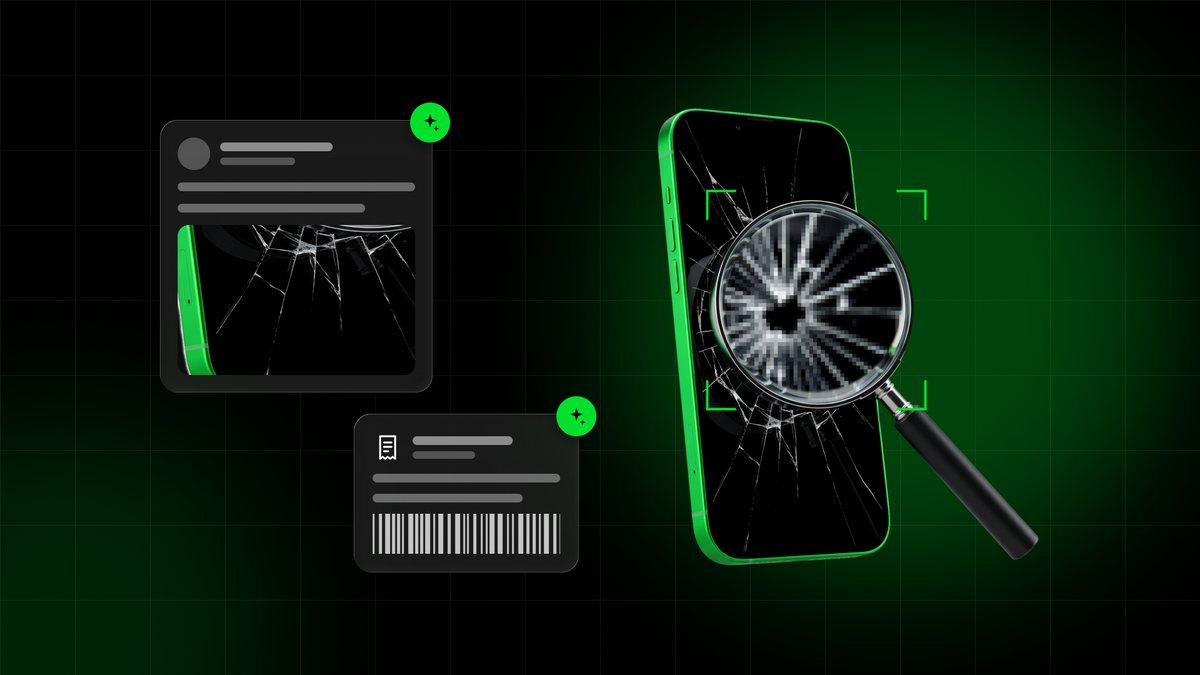
Visual Defect Simulation: AI tools can synthesize mold spots on fresh food, cracked smartphone screens, tears in fabric, and broken seals on packaging.
-
History Forgery: In addition to product images, it is possible to forge screenshots of support conversations, shipping receipts, and dented shipping boxes.
-
Cost-Free Evidence Generation: What once required advanced knowledge of image editing software can now be generated in just a few seconds by anyone using a smartphone.
The global retail market is already feeling the effects of this trend. In the United States, where approximately $849.9 billion in returns were processed in 2025 (of which about 9% were fraudulent), major clothing and accessory brands have begun reporting the inclusion of synthetic images in exchange requests. Similarly, academic research on the online sales ecosystem shows that the near-zero cost of fabricating visual evidence has significantly increased the pressure on store customer service channels.
The Store Owner's Challenge: the Asymmetric Cost of Manual Verification
The biggest obstacle for those who manage an e-commerce brand is the operational imbalance between creating fraud and trying to prove it:
-
The Ease of Forgery: Creating a photo of a damaged product takes less than a minute using AI and costs the requester practically nothing.
-
The Investigation Work: To prove that evidence is fake, the store's team must spend time analyzing tracking codes, images of the packaging at the factory, system logs, and the buyer's history.
-
The Attribution Dilemma: If the store adopts overly strict rules for issuing a refund, it makes support bureaucratic and harms honest buyers. If it is too flexible, it becomes exposed to silent financial losses at the end of the month.
Requiring meticulous manual verifications for every order creates an excessive workload and unnecessary friction in the customer journey.
How to Protect Yourself Without Punishing the Honest Customer
The answer is not to distrust every order or demand more photos from the customer, because that is exactly the type of evidence AI has learned to fabricate. The solution is to change where the verification takes place.
Rules by Risk Level, with a Unified Customer History
Not every request deserves the same treatment. Order value, category, return frequency, and relationship history say more about the risk than the photo sent. At Shopify, purchases and returns from all channels, including physical stores, are gathered in a single customer profile. With this complete view, the store automatically approves low-risk requests and sends only those that deviate from the norm for human review. Customers who have been buying for years continue to be served quickly.
Refund After Product Inspection
An image can be generated in seconds. The product inside the box cannot. When the refund is only released after the item is returned and inspected, the photo ceases to be final proof and becomes the starting point of the service. For low-value orders, the store can maintain agility. For high-value orders, inspection becomes the rule. In Brazil, this practice is supported by the Consumer Defense Code. When the customer alleges a defect, the supplier generally has up to 30 days to resolve the problem before the consumer can demand an exchange, a refund, or a price reduction.
Transaction Data Instead of Documents
Chat screenshots, payment receipts, and tracking captures are easy to forge. However, order, payment, and carrier records, consulted directly in the systems, are not. The rule is simple: the evidence the store consults at the source is what counts, not the one the customer attaches.
Authenticated Capture, a Growing Front
A practice that is beginning to gain ground, especially in the insurance sector, is authenticated capture. The photo is taken within an official app and receives a digital signature that records when, where, and with which device it was taken, and whether it was edited afterward. The standard behind this is called C2PA. It is not yet a definitive solution, because the signature can be lost along the way and, on its own, does not attest to the authenticity of the image. But it shows where evidence verification is headed.
Conclusion
None of these measures solves the problem alone. Protection comes from how they work together: the exchange policy sets the rules, logistics confirms what was returned, the customer history determines the level of scrutiny, and transaction data replaces trust in documents. Check orchestrates this set of tools on Shopify, so that each request follows the right path without relying on manual investigation.
If you want to understand how this flow would apply to your exchange policy, we can talk about what makes sense for your operation.
Sources
Roggio, Armando. “AI Makes Refund Evidence Easier to Fake”. Practical Ecommerce, July 16, 2026.
Smarty, Ann. “4 AI Generators for Images, Videos, Presentations, Voice”. Practical Ecommerce, May 2, 2023.
Bort, Julie. “Bot-detection startup Spur nabs $200M from Insight”. TechCrunch, July 2026.
Temkin, Marina. “Cyera agrees to acquire Oasis Security for $1B to safeguard proliferating AI agents”. TechCrunch, July 28, 2026.
Zhang, S. et al. “Generative AI-Enabled Refund Fraud in Chinese E-Commerce”. Tsinghua University and University of British Columbia (UBC), June 2026.
Brazil. Law No. 8,078, of September 11, 1990 (Consumer Defense Code), Art. 18.