

If you operate in the Brazilian B2B market, you know that the price displayed on the storefront is just the beginning. The real challenge arises at checkout: how to dynamically calculate ICMS-ST, IPI, and Differential Tax Rates, taking into account the buyer's CNPJ and the goods' destination?
The truth is that the native tax system of e-commerce platforms rarely meets the complexity of our country's tax regulations. For high-performance projects, the question is not whether you should integrate, but how to do so without degrading the user experience.
On Shopify, there are 3 options:
- Native tax system: it will apply a rate by state and exception, but it is still too simple to meet most B2B scenarios
- Tax engine: it will calculate taxes through an external system (Vertex or Avalara) and highlight them at checkout
- Calculation in the ERP: it will query the tax rates directly in the ERP and highlight the values at checkout
The Necessary Triangulation: Shopify, FullComm App, and ERP
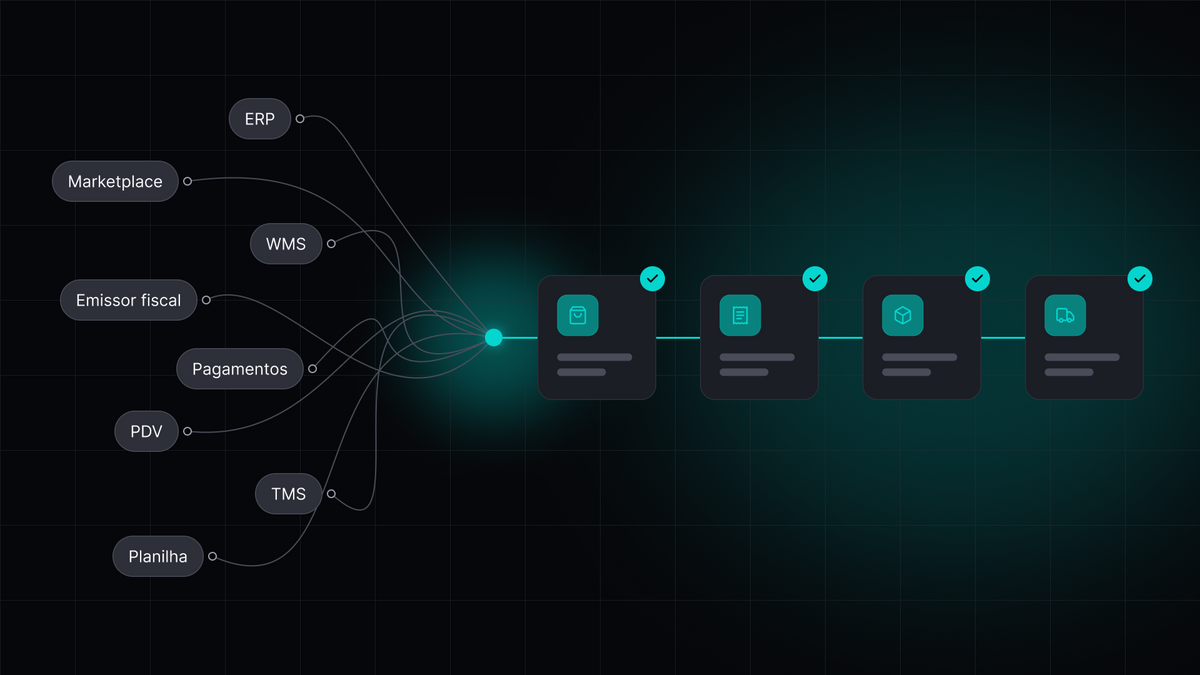
For tax calculation to be accurate, Check Commerce implements an architecture that goes beyond the market standard. The secret is not to "register rates" in Shopify, but to create an intelligent data bridge.
In our methodology, the process follows a three-layer technical rigor:
-
Identification and Context (Buyer Identity): The moment the B2B customer identifies themselves, the system needs to instantly recognize their Company Location. This defines the tax rule that will be applied.
-
The Intelligence Layer (FullComm App): This is where the magic happens. Through one of the FullComm apps, we intercept the checkout and query the Tax Engine of your ERP or tax system.
-
Data Injection via API: Instead of relying on static tables, we inject the externally calculated tax and shipping values directly into the Shopify checkout.
The result is surgical: the customer sees the tax breakdown in real time, and the final value exactly matches the Invoice that will be issued.

Why automation is the only way out?
Trying to simplify the tax rule to fit the platform's "native" functionality creates two serious risks:
-
Margin Loss: You pay the tax that you did not charge the customer.
-
Cart Abandonment: The customer completes the purchase, but the billing is blocked by the finance department due to value discrepancies, generating friction and cancellations.
- Exceptions: Brazil has more exceptions than rules, therefore the system must understand all tax substitution rules, exemptions, and tax incentives.
Check Commerce Expertise
The technical flow of analyzing risk, triggering events, checking credit, and fetching taxes in the ERP in milliseconds requires engineering that few agencies master. At Check Commerce, we do not just configure your store; we design the data architecture that supports your tax operation.
If your B2B project requires tax precision and seamless integration with your ERP's tax engine, you are in the right place. Schedule a technical consultation with Check Commerce and professionalize your B2B checkout.