
Anyone who manages an e-commerce catalog knows that perfect merchandising is rarely 100% automated or 100% manual. Until now, Shopify's traditional collection model required a choice: create smart collections (based on automatic rules, but inflexible for exceptions) or custom collections (entirely manual and difficult to maintain at scale).
For robust operations, this limitation often resulted in rework, duplicate product lists, or cluttered browsing experiences.
With the release of the GraphQL Admin API 2026-07 version, Shopify ends this dichotomy. The new Collection Sources API introduces a source-based model that guarantees e-commerce leaders granular control, combining the scale of automation with the precision of human curation.
The new source-based model (Sources)

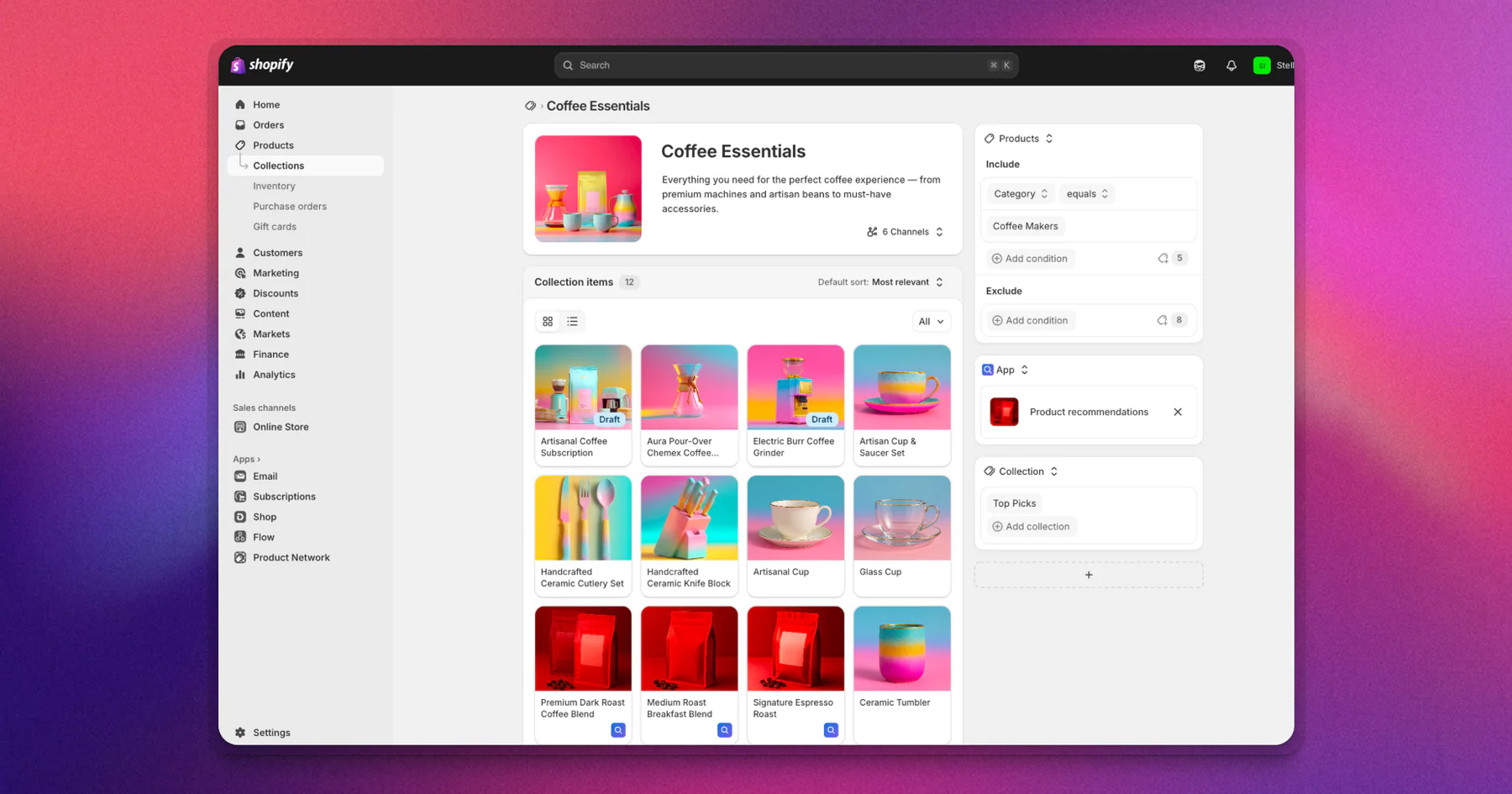
The main architectural change is that collections are no longer strictly smart or custom. Now, a single collection can combine multiple sources simultaneously.
In practice, this means that an operation can set up a collection using automated conditions (e.g., all products from brand X), add items manually (e.g., pin the bestsellers to the top of the page), and include specific exclusions, all in the same environment and without the need to maintain parallel lists.
Variant segmentation: A cleaner and more conversion-focused storefront
 From a user experience (UX) and conversion standpoint, Variant Targeting is the most significant advancement of this update. Previously, when including a product in a themed collection, all its variants were displayed, creating friction in browsing.
Now, segmentation goes down to the variant level. In a campaign focused on a "Winter Clearance Sale," for example, it is possible to display only the specific sizes that need to be liquidated in the storefront. This precision avoids frustration at the time of purchase, ensures more accurate filters, and delivers a browsing journey focused on the customer's intent.
Collections as operational building blocks
Another advancement of the new API is the ability of a collection to reference other collections as a source. This cascading model ensures that, if a "parent collection" is updated in the catalog, all collections derived from it will automatically inherit the update. This drastically reduces manual failure points and the time invested in catalog maintenance.
Native integration with the App ecosystem (App-owned sources)
Until today, third-party apps (such as review tools, artificial intelligence, or subscription models) had difficulty injecting their intelligence into the store's native collections, often needing to render lists in environments outside the platform's direct control.
With App-owned sources, these apps can now generate dynamic lists and rules that are integrated directly as a source in the native Shopify collection. The merchant gains the intelligence of third-party tools without losing operational control of their catalog.
Far beyond the storefront: The impact on e-commerce orchestration
Collections in Shopify are no longer seen only as product groupings for the storefront and establish themselves as essential business rules (shared primitives).
They can be kept hidden from the end user and used as a tactical basis for backoffice operations: creating ultra-segmented discounts, defining exclusive shipping logics, performing tax overrides, or orchestrating catalog substitutions much more precisely.
The new collections API delivers the flexibility that complex operations require. Less time spent managing rigid rules and more technical capacity to focus on what really matters: the conversion strategy.