

Dear reader,
Recently, the technology market, like me, was hit by a brutal piece of data: Walmart revealed that testing checkout directly within ChatGPT resulted in conversion rates three times worse (a drop of approximately 66%) than simply redirecting the user to the brand's own website.
As industry executives rightly pointed out, this wasn't a bug. It was an architectural error.
Trying to solve e-commerce by connecting a conversational chat to legacy systems ignores the real complexity of retail. E-commerce does not tolerate hallucinations; if inventory says zero, it's zero. If shipping has changed, the price changes.
However, the answer to this problem came in a landslide at Google I/O 2026. Google didn't just launch a feature; it introduced an entire layer of Agentic Commerce designed to fix exactly the foundation that ChatGPT was missing.
Why did ChatGPT's "Instant Checkout" fail?
At the end of last year, Walmart made about 200,000 products available in the OpenAI ecosystem through direct purchases in the chat. The result, detailed in a MarTech report (https://martech.org/walmart-says-chatgpt-checkout-converted-3x-worse-than-its-own-website), was rated as "unsatisfactory" by Daniel Danker, Walmart's Vice President of AI Acceleration.
The crucial mistake was trying to treat checkout as an isolated, commoditized step. Consumer behavior is complex:
- Users don't want to buy a single isolated item in the chat if they already have an open cart with other products on the retailer's website.
- The chat failed to offer essential cross-selling (such as suggesting the correct cables and mounts when buying a TV).
- The lack of visual cues and brand context destroyed trust at the moment of payment.
Because of this, OpenAI itself backed away from this centralized approach, shifting the focus back to product discovery and leaving the transaction to those who truly understand it: the retailer. On the other hand, Google has had commerce features for many years and was already ahead before anything even started.
Protocol Before Product
While the market was trying to teach AI to "talk" like a salesperson, Google spent months building the invisible digital rails. At Google I/O, these rails took shape with three interconnected announcements:
1. Universal Commerce Protocol (UCP)
The great foundation of it all. Initially launched in January in partnership with Shopify, the Universal Commerce Protocol (UCP) is an open-source specification developed in collaboration with commerce giants such as Shopify, Mercado Livre, Walmart, Target, and Etsy. It works as a common language so that any AI agent can read inventory, calculate taxes, and negotiate checkout terms directly with the merchant's backend. It is the "HTTP" of the future of commerce.
2. Universal Cart (The Smart Cart)
Built on UCP, the Universal Cart is a truly persistent, cross-device, multi-merchant shopping cart. As announced on the Official Google Blog, if you are building a computer and add parts from different retailers, the cart runs Gemini models in real time to: Proactively detect technical incompatibilities between parts. Search price history and automatically apply coupons. Cross-reference your credit card benefits (miles, cashbacks) via Google Wallet at the exact moment of the click.
3. Surface Expansion and the Spark Agent
Google does not want to create an isolated "shopping destination." The strategy is to inject transactional capability where user attention already is. The same cart will run natively on Google Search, Gemini, YouTube, and Gmail. To tie it all together, Spark will act as the autonomous agent capable of executing these end-to-end purchases at the user's command.
The Impact for the Check Commerce Ecosystem
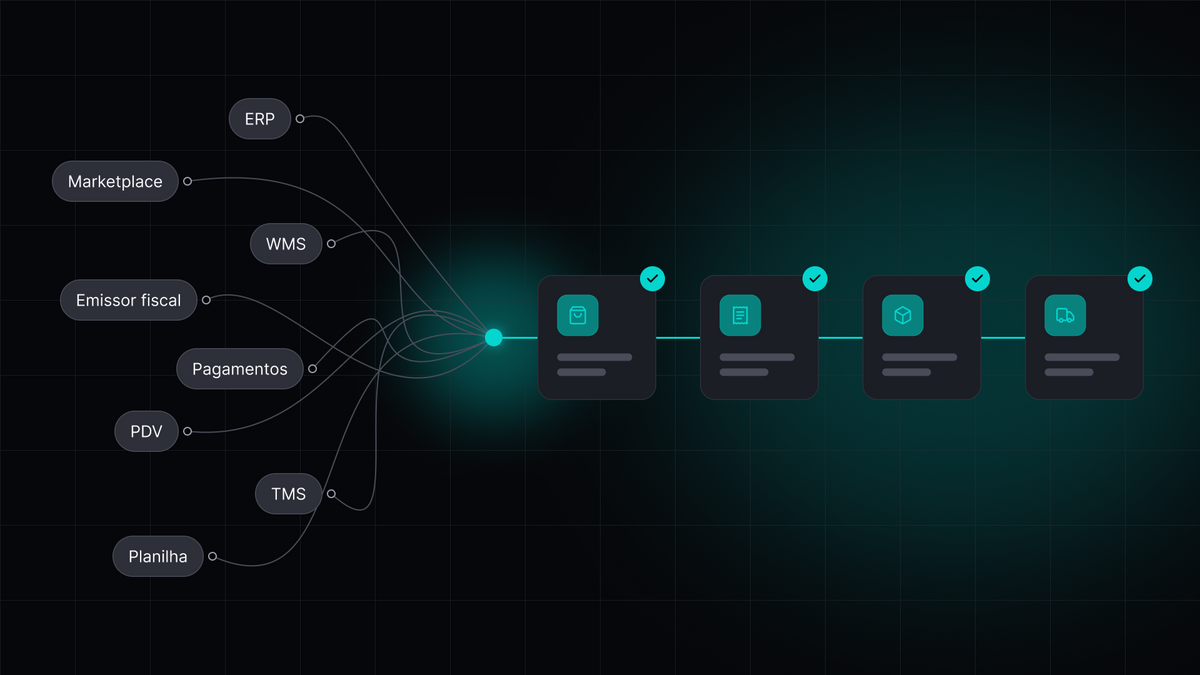
For us, who live the reality of e-commerce infrastructure, Google's move validates a central thesis: the retailer needs to remain in control.
Unlike Amazon's closed model—which absorbs the transaction and the customer for itself—Google's UCP architecture ensures that the merchant remains the Merchant of Record. Customer data, post-sales relationship, and tax rules remain under the brand's domain.
The lesson for 2026 is clear: The era of "plugging an AI chatbot" into your store ended before it even began. The future of agentic e-commerce belongs to the brands that adapt their infrastructure, APIs, and catalogs to talk to open protocols.
Those who focus only on the interface will continue to convert three times less. Those who focus on architecture will be available to be bought on any screen on the planet.
Sincerely,
Érico Scorpioni