

It is clear that we would not let the profound changes being driven by e-commerce pass us by. Therefore, these predictions are largely related to online consumption.
In recent weeks, all entrepreneurs have been forced to make some adjustment to their company operations. Whether to keep stores open in a sanitarily safe way, preserve inventory (especially essential items), adapt the distribution network, ensure supply, sell with closed doors, or boost electronic operations. But aside from last-minute adaptations, what will be the permanent changes in e-commerce?
“We have been hearing the term ‘unprecedented’ a lot, probably because there is no other way to describe what is happening. The crisis is not over yet; we have to keep learning and adjusting. But some clear ideas are starting to emerge,” wrote Doug McMillon, Walmart CEO, for Business Insider.
Predicting what society, consumption, and cooperation among citizens will be like is no easy task. In addition to the fact that we are not a research and trends company like WGSN, Forrester, and Nielsen, the political scenario has excessively influenced the results in the economy, health, and consumer behavior. Forecasting has a large margin of error, given that a decree or unilateral government decisions can change the entire scenario.
Dark Stores
If online sales grow significantly, many companies will opt to open small distribution centers within cities to offer faster deliveries. So-called dark stores are locations exclusively for storing, picking, and shipping online products, but unlike traditional distribution centers, which are gigantic and far from the city, dark stores are smaller, located in urban centers, and look like regular stores, but are closed to the public. But this novelty will mean more places where trucks and delivery drivers enter and leave, increasing traffic, noise, and pollution.
Shortages in Distribution Centers
One of the difficulties in finding certain products is that online stores organize their warehouses based on sales projections. This saves money when purchasing behaviors are predictable, but leaves less flexibility when demand increases unexpectedly, as in the case of the pandemic.
The rapid changes in the supply chain and the ABC sales curve cause the shortage of isolated products to continue. If e-commerce companies decide to permanently maintain more variety and deeper inventory, this will increase logistics costs, which will consequently be paid by the end consumer.
Returns are a health issue
Due to health concerns, many stores are limiting the returns they accept. If health fears continue, return policies may become permanently stricter. Stores may not be able to resell most of their returned merchandise, or they will need to sanitize it more thoroughly. The costs will undoubtedly be passed on to buyers.
The importance of the last mile
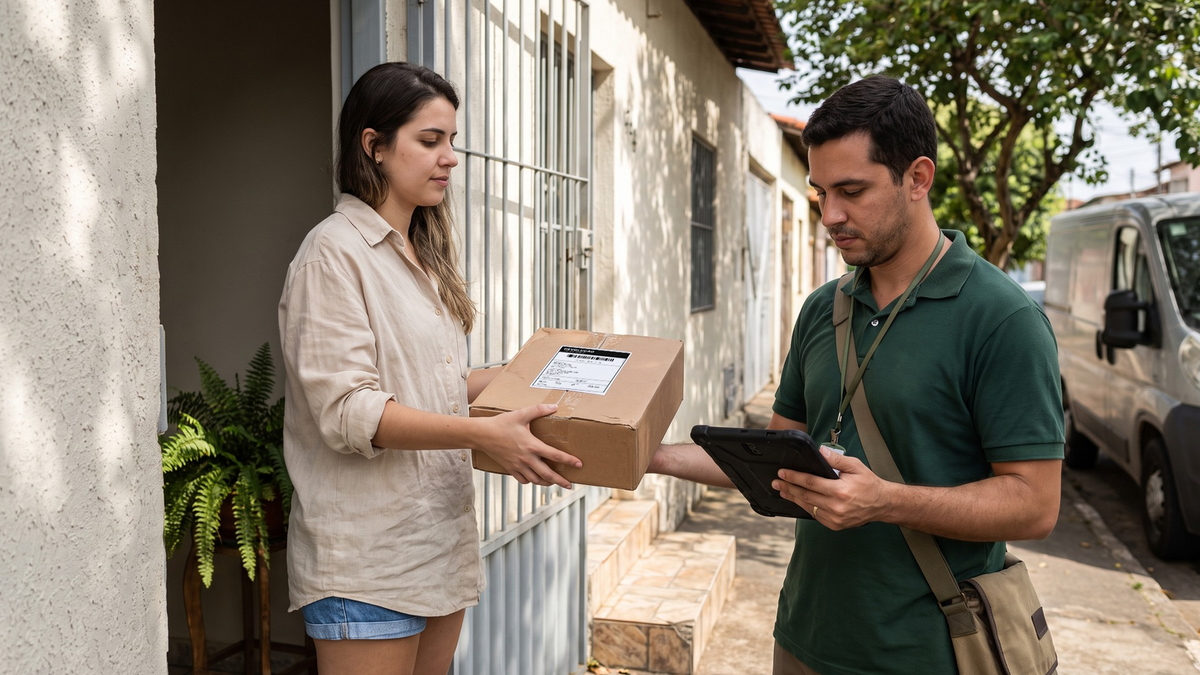
Little is said about supply chains, which operate silently behind the scenes and supply the population. Retailers have realized that the supply chain does not go from the distribution center to the store warehouse, it goes to the customer's door. The ‘last mile’ of delivery has become the bottleneck in recent weeks and will undergo positive transformations in the coming months as a result of emergency experiences and improvements that will become permanent.
E-commerce and delivery are the new normal
Since social distancing measures began, Brazilian e-commerce has been experiencing days of forced evolution. According to the Brazilian E-commerce Association (Abcomm), in March, more than 80 thousand new retailers debuted in the online universe, and 1 million new consumers ventured into e-commerce because they had no other alternative at the time. Many of these new consumers entered e-commerce through delivery apps, but many other categories also saw a significant increase. This behavior sets a precedent that could permanently change consumer behavior, increasing e-commerce's share of retail and increasing the penetration of e-commerce in certain audiences or sectors, such as the elderly and supermarkets, respectively.