
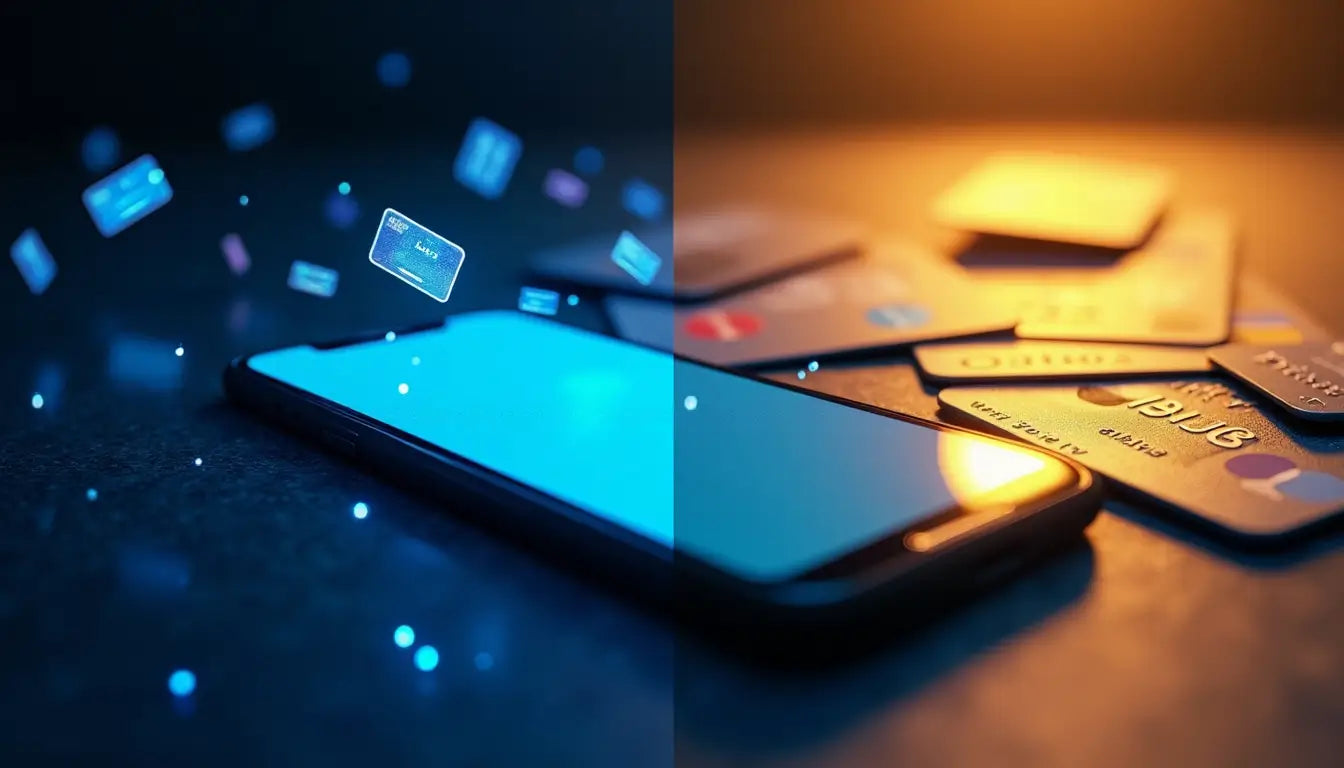
The Brazilian payment system is undergoing a historic transformation. In just three years, Pix has gained over 150 million users and processed R$ 15.7 trillion, directly threatening the credit card's position as the country's main payment method. This shift, led by the Central Bank, represents a revolution in the way Brazilians conduct their financial transactions.
The competition between Pix and credit cards reflects a new era in the national financial market. The exponential growth of transactions via Pix demonstrates a clear consumer preference for faster payment methods with no additional costs. This scenario raises important questions about the future of e-commerce, the democratization of financial services, and the role of traditional institutions in the Brazilian banking system.
The Evolution of Digital Payments in Brazil
The history of digital payments in Brazil dates back to 1968, when the first credit card was launched on the national market 1. This innovation marked the beginning of an era that would fundamentally transform financial transactions in the country.
The history of credit cards in the Brazilian market
The Brazilian card market has grown significantly in recent decades, becoming the second-largest card market in the world 1. The popularization of credit cards was driven by a Brazilian innovation: interest-free installments, introduced in the 1990s to replace post-dated checks 1.
The emergence and growth of Pix
The launch of Pix in November 2020 revolutionized the digital payments landscape. In just three years, the system has achieved impressive figures:
- Reached 76.4% penetration in the Brazilian population 1
- Recorded nearly 42 billion transactions in 2023 2
- Surpassed the combined total of all credit card, debit card, boleto, TED, DOC, and check transactions 2
Change in consumer behavior
The transformation in consumer behavior is evidenced by recent data from the Central Bank. The use of cash fell 36 percentage points between 2019 and 2023 1. Currently, Pix is cited as the preferred payment method by 64.9% of Brazilians 1, surpassing traditional methods.
The digitalization of payments also impacted the way Brazilians receive their income. In 2023, 64.1% of people reported receiving their main source of income in a bank account, a significant increase compared to 40.2% in 2019 1. This shift further boosted the adoption of electronic payments.
The digitalization process was accelerated during the Covid-19 pandemic, a period that coincided with the launch of Pix 3. The cost reduction compared to other payment instruments, such as TED, DOC, and cards, contributed to the rapid adoption of this new technology 3.
Comparative Analysis: Pix vs. Credit Card
With the growing adoption of Pix in the Brazilian market, a detailed analysis between this method and the traditional credit card reveals significant changes in the digital payments landscape.
Advantages and disadvantages of each method
Pix stands out for its instantaneity and 24/7 availability, allowing real-time transfers at any time 2. On the other hand, the credit card maintains its relevance through benefits such as rewards programs and the possibility of installments 4.
Main differentiators of Pix:
- Instant transfers 24 hours a day
- No fees for individuals
- Ease of use through QR Codes
- Immediate receipt for merchants
Costs for merchants and consumers
The difference in operating costs is a decisive factor for merchants. Pix has an average rate of 0.22% per transaction 5, while debit cards exceed 1% and credit cards reach 2.2% per sale 6.
This financial advantage has led many establishments to offer discounts for payments via Pix. Recent surveys show that 67% of Brazilians already use Pix for online purchases, surpassing the 57% who continue to use credit cards 6.
Speed and convenience in transactions
In terms of transaction volume, Pix recorded a significant growth of 74% in 2023, reaching approximately 42 billion payments and surpassing the combined transactions of credit and debit cards by 23% 7.
In e-commerce, Pix has already established itself as the preferred payment method, with 84% adoption among users, compared to 67% who use credit cards 8. This shift is particularly notable among classes B, C, and D/E, which showed significant increases in Pix adoption, with growth of 19%, 18%, and 18%, respectively 8.
The system's convenience has especially impacted the business sector, where B2B transactions via Pix reduce the need for working capital and improve companies' cash flow 6. For consumers, the ability to make instant payments without relying on card machines represents a significant advantage in terms of convenience.
Impact on Different Social Classes
The revolution of digital payment methods in Brazil has significantly transformed the landscape of financial inclusion, with distinct impacts on different segments of society.
Democratization of Payment Methods
Pix has emerged as a tool for financial democratization, achieving significant penetration among lower-income groups. The low-income population, with monthly incomes of up to R$ 1,500, represents 41.7% of registered users 9. This group accounts for 33.5% of receipts and 36.9% of payments made through the system 9.
Between March and October 2023, the number of receipts via Pix among the low-income population increased by 81%, while payments grew by an impressive 131% 9. This expansion demonstrates the effectiveness of the system in promoting financial inclusion.
Access to Credit vs. Instant Payment
The profile of financial service usage varies significantly among social classes. Data reveals that:
- Only 9.1% of Black and mixed-race women in class DE have already applied for bank loans 10
- 24.1% of white men in class AB1 have access to bank credit 10
- 71.3% of people do not use positive words to describe their current financial situation 10
Socioeconomic profile of users
The socioeconomic distribution of credit card users presents distinct characteristics. An analysis by the Central Bank identified that, among 49.9 million individuals with credit cards 11:
- 41.8% (20.9 million) were formally employed
- 16.1% (8.1 million) were social program beneficiaries
- 36.3% (18.1 million) were not mapped in the databases 11
The middle class, with incomes between R$ 1,500 and R$ 7,000, represents 33.4% of Pix users 9, while the high-income bracket, with incomes between R$ 7,000 and R$ 25,000, totals 7.5% of users 9. This distribution demonstrates Pix's potential as a tool for financial inclusion, especially for segments traditionally underserved by the banking system.
The impact on different social classes is also reflected in the multiple use of financial services. While white men in class AB1 use an average of 5.8 financial products, Black and mixed-race women in class DE use only 1.8 products on average 10, highlighting the persistent inequality in access to financial services.
Security and Regulation
The security of digital payment methods has become a national priority, with the Central Bank implementing robust measures to protect consumers and financial institutions.
Consumer protection measures
The Central Bank established the Special Return Mechanism (MED) for cases of Pix fraud, allowing victims to request reimbursement for up to 80 days after the transaction 3. The process includes:
- Immediate notification to the financial institution
- Blocking of funds in the receiving account
- Analysis of the case within 7 business days
- Return of the amounts within 96 hours after confirmation of fraud
Fraud and scams: prevention and risks
To strengthen transaction security, the Central Bank implemented new rules that limit transactions on unregistered devices to R$ 1,159.80 per transaction, with a daily cap of R$ 5,800.00 12.
Main preventive measures include:
- Two-step verification for device registration
- 24-hour transaction monitoring
- Violation notification system
- Information lookup linked to Pix keys
In the field of credit cards, financial institutions invested R$ 3.4 billion in security mechanisms and digital fraud prevention in 2022 13. The measures include advanced encryption and continuous monitoring of suspicious transactions.
Digital payments regulatory framework
The Brazilian financial system has undergone significant regulatory modernization. The Central Bank established four fundamental dimensions for Pix security 13:
- User authentication
- Transaction traceability
- Secure information transmission
- Specific operating rules
The new Open Finance governance structure, expected in January 2025, will further strengthen the security of the financial system 14. This structure establishes clear objectives, performance targets, and strict ethical standards for participating institutions.
For credit cards, the Consumer Defense Code and the resolutions of the National Monetary Council establish specific security guidelines 15. Institutions must maintain strict controls and implement fraud prevention systems that include real-time monitoring and behavioral analysis.
The Central Bank recently expanded the scope of mandatory participation in Open Finance to institutions with more than five million customers, covering 95% of existing financial relationships 14. This measure aims to strengthen the security and transparency of the financial system as a whole.
Trends and Future Perspectives
The future of payment methods in Brazil points to unprecedented integration between different technologies, with Pix leading important innovations in the financial sector.
New Pix Features
The Central Bank is preparing a series of significant updates for Pix. Automatic Pix, scheduled for June 2025, will allow automated recurring payments, especially benefiting companies in various sectors, such as public utility companies, schools, and health plans 16.
Other planned innovations include:
- Contactless Pix: Expected in February 2025, it will allow payments by holding a cell phone close to a reader, similar to the technology already used in contactless cards 16
- International Pix: Currently under development, it will enable international transfers with the same efficiency as the domestic system 16
Evolution of credit cards
The card sector demonstrates resilience through technological adaptation. In 2023, the total volume of processed payments reached R$ 3.247.44 billion 1. Financial institutions are investing significantly in new technologies, with:
- 55% in payment gateways
- 30% in network services
- 10% in price differentiation software 1
Technology convergence
The integration of different payment methods marks a new era in the financial sector. Open Finance, which allows data sharing between institutions authorized by the Central Bank, is transforming the market 17. This evolution enables:
- More integrated management of personal finances
- Greater personalization of financial services
- More intense competition among institutions 17
One significant innovation expected is the credit card function in Pix, with launch expected by the end of 2025 18. This feature promises to reduce costs for merchants through:
- Direct discount on the bank's risk fee
- Lower cost for receivables advance
- More efficient collateral process 18
The future also points to a greater plurality of payment methods, with expected growth in digital wallets and cryptocurrency use 17. Digital transformation continues to accelerate, with 80% of Brazilians with smartphones making at least one purchase via app monthly 19.
Brazil maintains its leadership position in payment methods innovation, surpassing several developed countries in terms of technology and efficiency 17. This technological vanguard is reflected in the development of Drex, the Central Bank's digital currency, which will enable asset tokenization and promises to redefine traditional transaction structures 19.
Conclusion
The transformation of the Brazilian financial system through Pix demonstrates profound changes in the population's payment habits. Striking numbers prove this reality: 150 million active users, R$ 15.7 trillion moved, and a strong presence across all social classes.
The Brazilian digital payments market consolidates its position as a global reference in financial innovation. Robust security measures, combined with new features such as Automatic Pix and international payments, establish solid foundations for continuous expansion of the system.
Credit cards adapt to this competitive scenario through exclusive benefits and technological modernization. This coexistence between different payment methods directly benefits consumers and merchants, who gain more options and lower operating costs.
The near future promises significant advances with the arrival of Drex and greater integration between payment systems. This constant evolution reaffirms Brazil's leading role in the revolution of digital payment methods, democratizing access to financial services and boosting national economic development.
References
[1] - https://www.pwc.com.br/pt/estudos/setores-atividade/financeiro/2024/instituicoes-de-pagamento-inovacao-e-inclusao-financeira.html
[2] - https://www.cnnbrasil.com.br/economia/macroeconomia/pix-ja-e-principal-forma-de-pagamento-do-pais-veja-pros-e-contras-do-servico/
[3] - https://www.serasa.com.br/premium/blog/golpes-do-pix-como-se-proteger/
[4] - https://abefin.org.br/qual-melhor-escolha-para-o-consumidor-cartao-de-credito-debito-pix-ou-dinheiro-vivo/
[5] - https://www.infomoney.com.br/minhas-financas/pix-e-mais-barato-que-pagamentos-por-cartoes-de-credito-e-debito-para-lojista-dizem-economistas-do-bc/
[6] - https://bancoutil.com.br/pix-e-mais-usado-que-cartao-de-credito/
[7] - https://www.infomoney.com.br/minhas-financas/pix-esta-matando-pagamentos-em-dinheiro-cartao-de-credito-sera-a-proxima-vitima/
[8] - https://www.cnnbrasil.com.br/economia/financas/pix-passa-o-cartao-de-credito-como-meio-de-pagamento-online-preferido-no-brasil-diz-pesquisa/?hidemenu=true
[9] - https://www.cnnbrasil.com.br/economia/macroeconomia/populacao-de-baixa-renda-ja-e-maioria-entre-usuarios-do-pix-aponta-banco-central/
[10] - https://agenciabrasil.ebc.com.br/economia/noticia/2023-08/relacao-com-credito-bancario-varia-conforme-classe-social-diz-estudo
[11] - https://www.bcb.gov.br/conteudo/relatorioinflacao/EstudosEspeciais/Perfil_usuarios_cartao_credito_taxa_juros_rotativo.pdf
[12] - https://www.bcb.gov.br/detalhenoticia/20390/noticia
[13] - https://consumidormoderno.com.br/protecao-golpe-pix/
[14] - https://www.bcb.gov.br/detalhenoticia/20214/noticia
[15] - https://www.procon.sp.gov.br/wp-content/uploads/2021/02/CartaodeCredito.pdf
[16] - https://tiinside.com.br/18/09/2024/o-futuro-dos-pagamentos-no-brasil-a-revolucao-do-pix-por-aproximacao-e-seu-impacto-nas-pmes/
[17] - https://www.tecban.com.br/blog/evolucao-dos-meios-de-pagamento-no-brasil-avancos-e-desafios
[18] - https://www1.folha.uol.com.br/mercado/2024/11/pix-com-funcao-de-cartao-de-credito-pode-ser-realidade-no-fim-de-2025-preve-campos-neto.shtml
[19] - https://www.suno.com.br/noticias/colunas/thiago-bartolozzi/meios-de-pagamento-inovacoes-encomendadas-2024/