

High-performance digital-native brands have made launches routine: limited-time collections, seasonal editions, and collaborations every two weeks. A campaign attracts the audience, but what determines whether that intent turns into revenue is your store's ability to absorb the peak without crashing. And that capacity isn't solved by the campaign—it's solved by the infrastructure. This guide explains how to structure a Shopify e-commerce store to launch frequently without breaking.
In the direct-to-consumer model, your owned channel is no longer just a catalog; it has become the strategic center of the operation, where leadership controls margins, purchase data, and growth pace. To sustain scale in this scenario, the cadence of new releases has become the revenue engine. And the numbers back up the bet:
Higher retention with continuous cadence: digital brands that operate with recurring seasonal launches maintain engagement and repeat purchases considerably above static catalog operations.
Revenue concentrated in a few hours: exclusive editions can concentrate the equivalent of weeks of normal sales in a single window.
The problem is the gap between marketing's desire to launch constantly and the infrastructure's ability to absorb that demand. When traffic volume multiplies in minutes, inventory needs to synchronize in real time and pricing rules have to work under stress. A store not designed for this recurring strain begins to collect the hidden cost of every launch: slow pages, catalog failures, unavailable checkout, and a team operating at its limit. Launching continuously is not a campaign strategy. It is a system architecture requirement.
The financial weight of technical friction at checkout
Measuring the success of a collection solely by gross revenue hides the loss generated by structural failure. Checkout stability and fluidity directly control conversion, and there is public data that quantifies this:
Speed drives revenue: in the Milliseconds Make Millions study, conducted by Deloitte and 55 at the request of Google, an improvement of just 0.1 seconds in mobile loading time increased retail conversion by 8.4% and average order value by 9.2%. Conversely, every fraction of a second of slowness pushes the customer away before they even build the cart.
Technical error kills sales at payment: according to the Baymard Institute, 17% of checkout abandonments happen because the site had an error or froze. It is the only cause on the list that no design adjustment can solve, and it appears most frequently precisely during traffic peaks.
In a short-term launch, this risk is concentrated. Putting a collection live requires a series of simultaneous interventions with zero margin for error:
- Page and catalog publication: inserting photos, high-resolution videos, and descriptions without compromising the site's response time.
- Temporary promotional rules: activating progressive discounts, bundles, or exclusive shipping tables for the action window.
- Inventory integrity: delay-free communication between the store, the ERP, and the distribution center.
- Transaction processing: stable checkout in the face of thousands of simultaneous payment requests.
If your store needs to call a developer every time a collection changes to modify the page code, or if you monitor payment with the fear that the site will go down at the peak, what you have is an architecture problem, not a marketing one. The role of marketing is to generate desire. The duty of platform architecture is to ensure that this desire turns into revenue with precision, protecting the margin.
How to design a Shopify store for traffic peaks and high cadence
To safely release launches every two weeks, the infrastructure needs to be designed around two principles: modularity and resilience. At Check Commerce, we work in the Architecture layer precisely to design environments that sustain this pace. The design uses Shopify as a stable foundation to unify data, channels, and payment infrastructure. As a Shopify Plus Partner, we architect the ecosystem to eliminate code bottlenecks and give teams autonomy:
- Modular front-end, without technical dependency for every collection. Instead of rigid code that requires specialized maintenance every time a collection changes, we architect themes based on native modular sections. Marketing gains the autonomy to publish showcases, seasonal landing pages, and product pages in just a few clicks, without stacking heavy scripts.
- Checkout rules for high concurrency. Shopify offers elastic infrastructure for extreme peaks. We structure the business rules so that promotions, volume discounts, and restrictions run protected within the platform, ensuring transaction processing without a waiting line.
- Clean catalog and inventory synchronization. Selling an out-of-stock item in a flash launch generates reversals, friction, and loss of reputation. With a clean integration architecture, we configure the communication between the store and logistics systems so that inventory deduction occurs in milliseconds, regardless of the volume of incoming traffic.
The orchestration behind anxiety-free growth
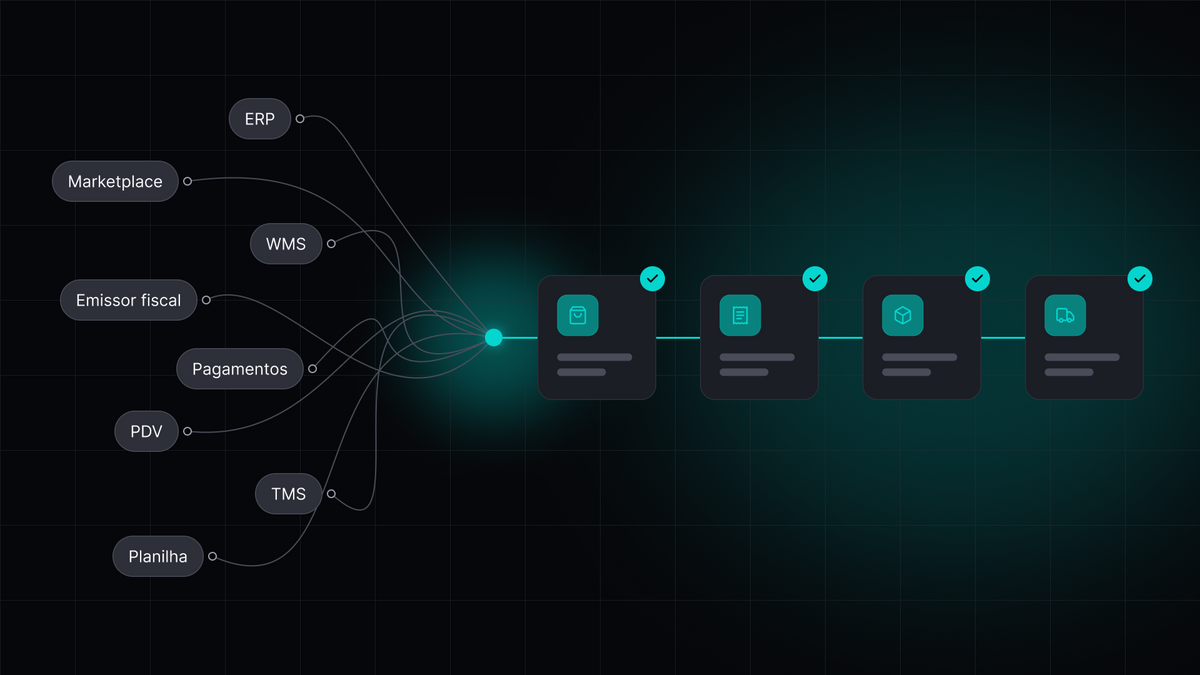
Accelerating cadence by accumulating standalone tools and disconnected scripts creates a fragile operation. Solving the complexity of modern e-commerce requires that catalog technology, the logistics flow, and checkout rules work in sync. This is why healthy scale depends on orchestration: not replacing your foundation, but having a specialized layer coordinating the architecture of the ecosystem so that the systems operate as a single, elastic, and predictable structure.
When your store counts on this level of orchestration, the launch loses its character as a risky event and becomes a standard revenue generation process. You know how long it takes to upload a new catalog, you have clarity on how the store will react to the peak, and you operate with the certainty that every sale will be finalized. Marketing launches. Architecture sustains. And growth happens without anxiety.
Sources and references
- Google, Deloitte and 55, "Milliseconds Make Millions" (2020): impact of mobile speed on conversion (0.1s = +8.4% in retail, +9.2% in average order value).
- Baymard Institute, Checkout Usability & Cart Abandonment: 17% of checkout abandonments due to site error or freezing.
- Shopify, documentation and materials on scalability, modular themes, and high-tolerance checkout infrastructure.