
Selling to other countries has stopped being a distant goal and has become a natural growth layer for those who already dominate the local market. According to DHL eCommerce, 70% of online shoppers worldwide already buy from stores outside their country, and 45% do so at least once a month. Projections indicate that international e-commerce could exceed $4.81 trillion by 2032.
For the Brazilian e-commerce manager, this number matters less for its size than for its direction: international buyers are already buying from abroad. The question is no longer "is there demand?" but rather "is my operation ready to meet this demand without losing margin?"
What actually is a cross-border sale
A cross-border sale happens when a customer in one country buys from a store based in another through a digital platform. In practice, the typical flow goes through five stages:
-
The international customer visits the online store.
-
They view the price in their local currency and shipping options.
-
Taxes are calculated at the time of purchase.
-
The order is shipped and goes through customs.
-
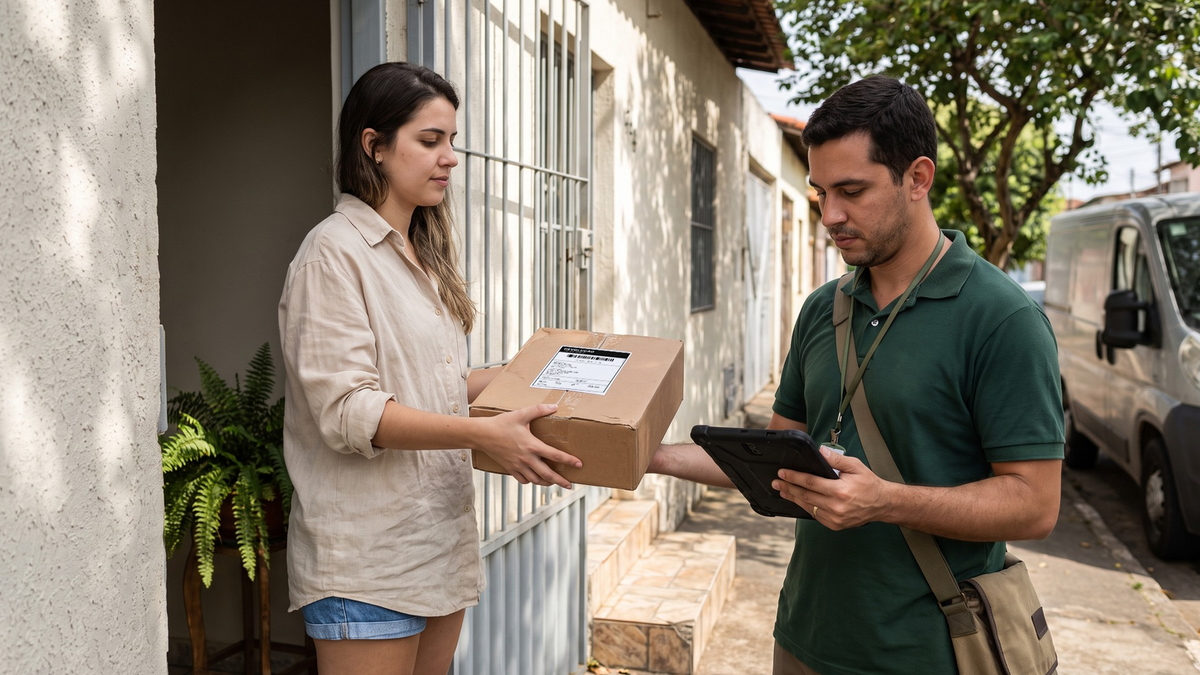
The carrier delivers the product to the final buyer.
Each of these stages is a point where the operation can lose the customer if it is not prepared.
The building blocks that support an international operation
To consistently support cross-border sales, the structure generally covers six fronts:
-
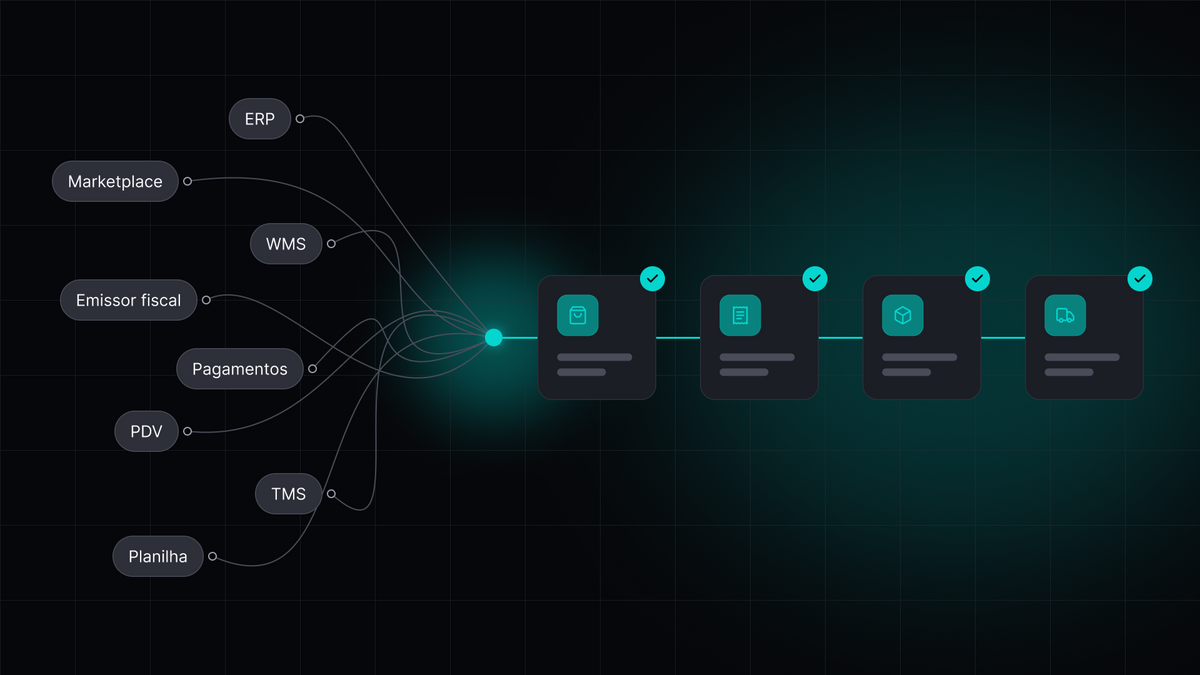
Localized store: Content, navigation, and product information adapted to each market, with customer, order, and inventory data centralized.
-
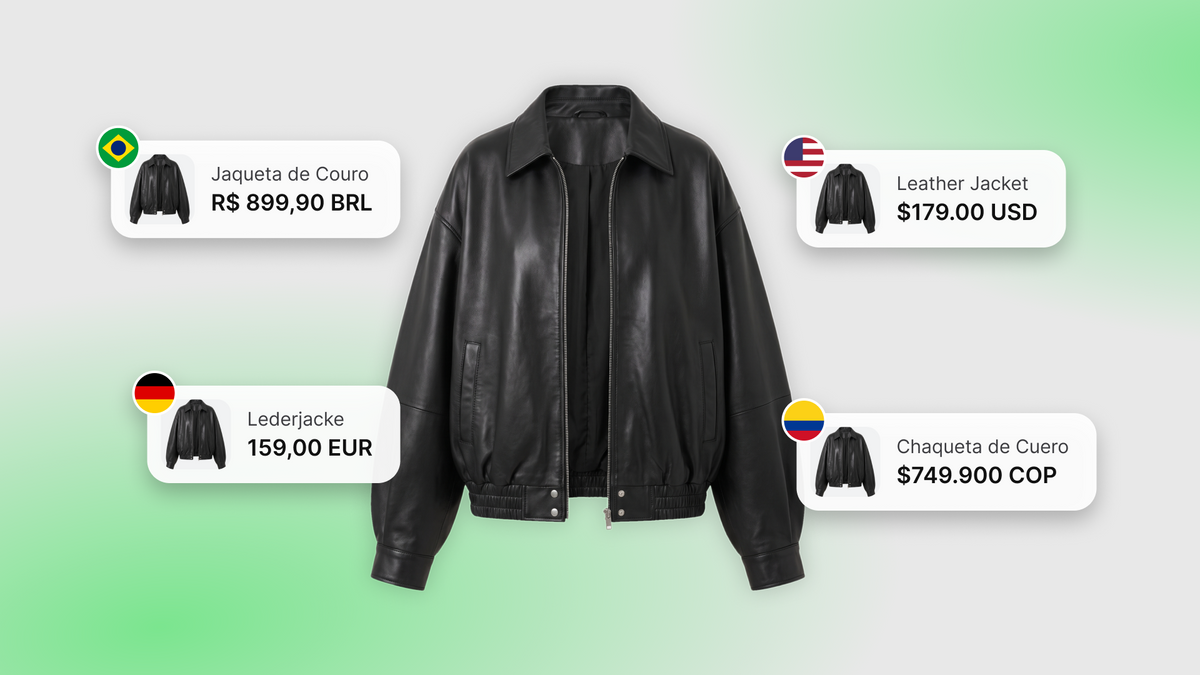
Multi-currency pricing: The buyer needs to see exactly how much they will pay, in their currency, before finalizing the purchase.
-
Local payment methods: Digital wallets, bank transfers, and other payment methods familiar to each region.
-
Tax and fee calculation: Showing the total cost of the order upfront avoids surprises upon delivery. Unexpected extra costs, such as shipping, taxes, and fees, are the main reason for checkout abandonment in e-commerce in general: 39% of shoppers abandon it for this reason, according to the Baymard Institute. In international sales, where customs fees come into play, this risk is even greater.
-
International shipping and tracking: Reliable carriers and transparent delivery times.
-
Return flow: A clear process for international returns, whether in-house or outsourced, prevents logistics costs from becoming a recurring loss.
The real gains of selling abroad
-
Market expansion: For brands that already feel saturation in the domestic market, where gaining market share becomes expensive and difficult, selling abroad opens access to an entirely new customer base.
-
Risk diversification: Depending on a single market or currency leaves the operation exposed to any local fluctuation. Selling in multiple countries distributes this risk.
-
Revenue potential: With most global buyers already buying from abroad, less saturated markets usually bring a lower customer acquisition cost.
-
Economies of scale: Volume purchasing, more efficient logistics, and optimized production tend to reduce the cost per unit, strengthening the margin more broadly than would be possible operating only in the domestic market.
Where most operations get stuck
Shipping, fees, and logistics:
Import restrictions, shipping cost variation, and longer delivery times complicate tracking, warranty, and returns. According to research by Avalara, three out of four consumers rethink buying from a store after a surprise customs fee, and almost half simply refuse the delivery when this happens.
Exchange rates and payment:
Dealing with multiple currencies, different payment methods, and cross-border transaction fees requires constant adaptation, including the higher risk of fraud in international transactions.
Regulatory issues:
Each country has its own set of tax, data protection, and foreign trade rules, and this scenario is being reviewed frequently in different markets. The practical point for the retailer is not to follow every change in isolation, but to build an operation flexible enough to adapt as the rules evolve, instead of depending on a fixed configuration that breaks with every regulatory adjustment.
Language and culture:
Understanding local tastes, language, and habits should guide marketing, customer service, and product descriptions. Starting by localizing the highest-impact pages, such as the best-selling collections, anchor products, and the checkout flow, tends to bring a faster return than trying to translate everything at once.
Customer trust:
Winning the trust of a buyer in a new market takes time, and any slip-up in customer service, returns, or warranty weighs more in this initial phase than it would with an already loyal domestic customer.
How to assess if now is the time
Before expanding, it is worth answering honestly:
-
Does your product make sense for the international market?
-
Do you already have organic traffic coming from abroad?
-
Do your margin and average ticket support the additional cost of taxes, fees, and international shipping?
-
Does your operation have the structure to provide support, process returns, and localize the experience?
-
Does your team have the capacity to deal with the regulatory complexity that will come?
If the answer to most is yes, the next step is market research: observe where the organic international traffic is already coming from and cross-reference this with external indicators, such as regional economic growth, cross-border buying habits, and the local competitive landscape, to decide where to expand first with greater safety.
The foundation that supports this decision
After validating the market, the execution follows some simple principles:
-
Localized strategy: Adapt the offer, price, marketing, and customer service to the cultural standard of each market, not just translate what already exists.
-
Transparent logistics: Showing the cost and delivery time before purchase avoids the biggest point of friction: the surprise fee upon delivery.
-
Secure and local payment: Offering payment methods recognized by the buyer in each region increases trust at the most sensitive moment of the journey, the checkout.
-
Multilingual customer service: Support handled with the culture and language of each market reduces support tickets and increases retention, especially because the international buyer rarely gives a second chance after a bad first experience.
-
Continuous evaluation: Metrics, feedback, and market trends need to be reviewed frequently, because what works today in one country may not work the same way in six months.
The takeaway for the Brazilian manager
Cross-border commerce is no longer an isolated marketing experiment. It is a growth front that coexists with regulatory, exchange rate, and logistics volatility in any market in the world. The advantage is not in predicting every rule change, but in building an operation structured enough to absorb these changes without losing margin, nor the trust of the customer who just met your brand.
If after reading this you still do not know if this is the right time for your operation to expand borders, this is exactly the conversation worth having.
Talk to Check Commerce and understand, case by case, if your business already meets the conditions to sell abroad safely, or what still needs to be structured before the first international order.
Sources
DHL eCommerce. "Cross-Border Buying Behavior Trends 2026". Global survey with online shoppers about international buying habits and cross-border market projection.
Baymard Institute. Checkout usability survey (2025). Reasons for cart abandonment among online shoppers in the United States.
Avalara. "Avalara Survey Finds Hidden Fees Stifle Cross-Border Consumers" (July 2024). Impact of unexpected customs fees on international consumer behavior.