

We are being bombarded with news about Artificial Intelligence every day. Most of it focuses on things like "chatbots for customer service," "realistic video generation," "web design is dead," or "AIs that write text." But the technology market is shifting gears, and the global e-commerce giant Shopify has just made three quiet releases that show where the money is really going.
Shopify is not trying to use AI to serve your customer—that was already solved over a year ago with MCPs. It is preparing stores to sell directly to AIs.
Imagine a very near future where your customer no longer visits your website to choose a t-shirt. Instead, they tell their AI: "I need a blue shirt, size M, made of Egyptian cotton, delivered by Friday, with the best value for money." The AI goes online, searches stores, chooses the best option, makes the payment, and notifies the owner.
This is what we call Agentic Commerce, and Shopify has just created the rules of this game based on three fundamental pillars: Discovery, Communication, and Identity.
The 3 Pillars of Future E-commerce
1. Discovery: The Exclusive "Menu" for Robots
Humans buy with their eyes. We like beautiful websites, large photos, flashing banners, and attractive colors. But Artificial Intelligences hate that; for them, visual design is just "noise" that slows them down.
-
What Shopify did: It created technology that allows stores to generate a secret page in a plain-text, highly organized format (
.txtand.mdfiles). -
What this means in practice: It is as if your store now had two menus. One beautiful and illustrated one for human customers, and another in a simplified spreadsheet format for shopping robots. The brand that has this "menu for robots" will be the first one read and chosen by AIs.
2. Communication: The Universal Business Translator
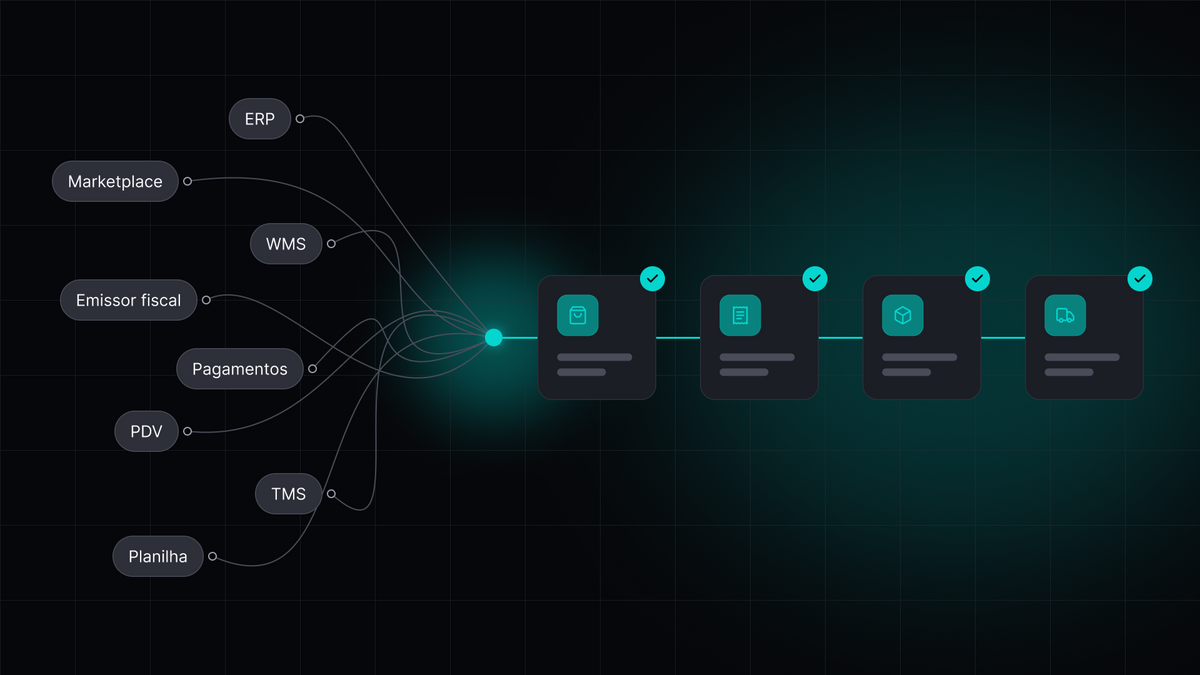
After the AI finds your product, it needs to "talk" to your store to find out details: "Is it in stock? How much is the shipping to this zip code? If I take two, is there a discount?". In the past, every e-commerce system spoke a different language, making this conversation impossible.
-
What Shopify did: It adopted a global communication standard called MCP (created by Anthropic, one of the world's largest AI companies).
-
What this means in practice: Shopify installed a universal translator at the door of millions of stores. Now, any shopping robot on the planet can enter any Shopify store and pull price and inventory information in milliseconds, using exactly the same language.
3. Identity: The Virtual Buyer's Badge
Here is the biggest fear of any operations director: if millions of robots start entering your website at the same time to search for products, your server could crash. For traditional security systems, a million robotic accesses looks like a hacker attack (DDoS). How do you separate the "good" robot (that wants to buy) from the "bad" robot (hacker)?
-
What Shopify did: It created a digital identification system called Web Bot Auth.
-
What this means in practice: It is the robot's "badge" or passport. Shopify established a rule: the shopping robot that properly identifies itself gets a free pass, a red carpet, and high speed to complete the order. The robot that tries to enter secretly or disguised as a human will be blocked by the store's digital security.
The Impact on Your Business: Why You Should Care?
Digital retail has spent years focused on optimizing the website for Google (SEO) to attract human clicks. What Shopify is warning us about, very clearly, is that the next buyer of your product will not have eyes, they will have algorithms.
Those who prepare for this infrastructure now will not just be updating the website; they will be ensuring that the brand is "visible" to the most efficient buyers on the market: your customers' personal AI assistants.
E-commerce is changing format, and your company needs to decide whether it will lead or try to understand the game when sales are already falling.
Want to access the documentation?
https://shopify.dev/changelog/storefront-catalog-mcp-now-implements-ucp
https://shopify.dev/changelog/bots-and-agents-should-identify-themselves-via-web-bot-auth
https://shopify.dev/changelog/customize-llmstxt-llms-fulltxt-and-agentsmd