
Your operation prepares all year round for demand peaks. Campaigns are adjusted daily, inventory is replenished at distribution centers, and the digital storefront is optimized. Traffic increases, customers fill their carts, and payments are approved.
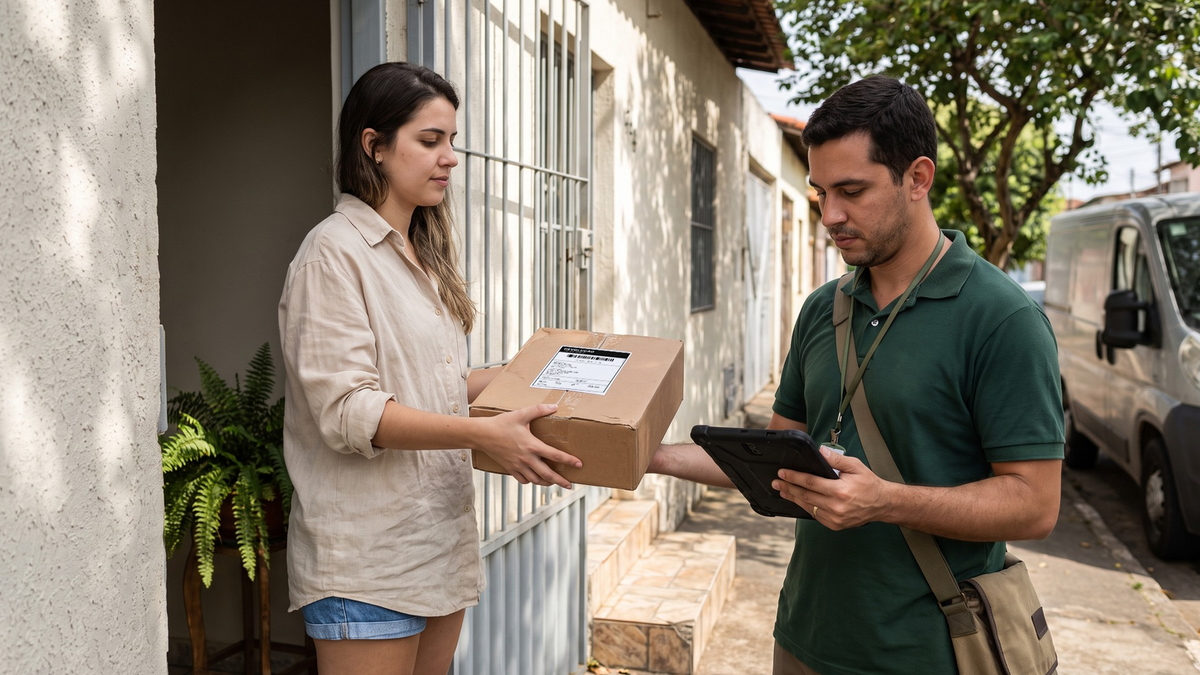
But the real test for the health of the business begins after the box reaches the consumer's hands. One phrase sums it up well: Black Friday doesn't end when the order is delivered. It is in after-sales, and especially in reverse logistics, that a good part of the margin is lost or protected.
The costs of returns in Brazilian retail
There is a silent cost in after-sales that erodes revenue when the store's structure is not prepared for it. You may even sell record volumes every month, but the profit margin will only be permanently secure if the complete order cycle is managed in an integrated way, from purchase to return.
To gauge the urgency of organizing your exchanges and returns flow, the market's own data paints the real scenario your company faces daily. A study by the Brazilian Retail Association, conducted together with Aftersale, found that R$ 59 billion in merchandise is returned every year in Brazil.
This amount represents 12% of all products sold in the country annually, and the cost of reverse logistics consumes about 3.6% of revenue.
If your company still treats reverse logistics as a mere exception to the rule, your financial planning is operating with a constant leak of resources.
What changes in returns with split payment
The logistical challenge, which is already complex by nature, gains a new layer with the recent updates of the tax reform. According to recent articles published by E-Commerce Brasil, the new split payment model changes the rules of the game for online retail.
With the mechanism known as split payment,, the sales tax is separated at the time of payment and does not pass through your cash register. When the customer returns a product, this value returns to your operation, but not automatically or immediately: depending on the buyer's profile, the recovery can take from a few days to a full settlement cycle. During this time, it is idle working capital.
There is a detail that weighs more than the deadline: the recovery only begins when there is a return tax document. Merchandise back in stock, without an issued invoice, does not trigger anything. In an operation with hundreds of exchanges per week, depending on manual issuance means leaving money held up longer than necessary.
The implementation will be gradual starting in 2027, which makes this the time to prepare the operation.
How to automate exchanges and returns on Shopify
The sustainable growth model that separates those who scale from those who get stuck requires a solid foundation where systems, data, and journeys operate fluidly.
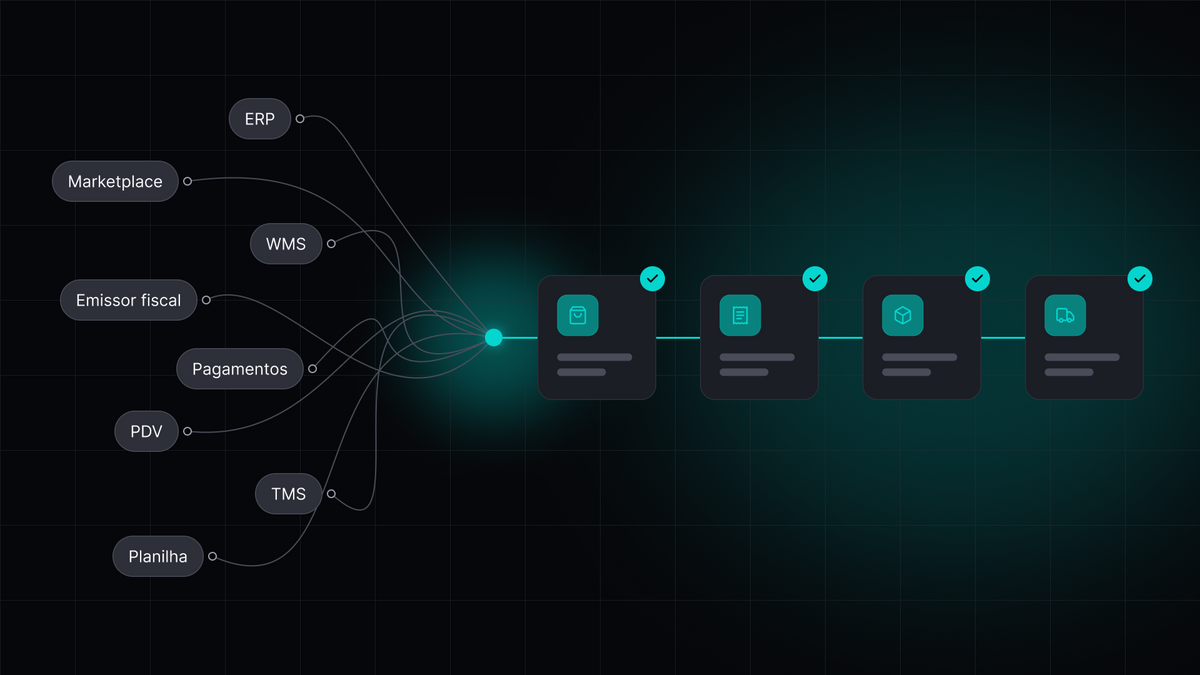
To not leave working capital idle in retained taxes, nor accumulate reverse logistics costs, the exchanges and returns flow needs to be automatic, predictable, and integrated with the store. In the Integrations layer of Check Commerce, your operation connects to the ERP, warehouse systems, and fiscal flow.
Within this layer operate the FullComm Software apps, developed for the particularities of the Brazilian market and approved by Shopify. With them, your store stops depending on improvised integrations, which usually fail precisely during sales peaks.
Automatic return tax invoice and shipping
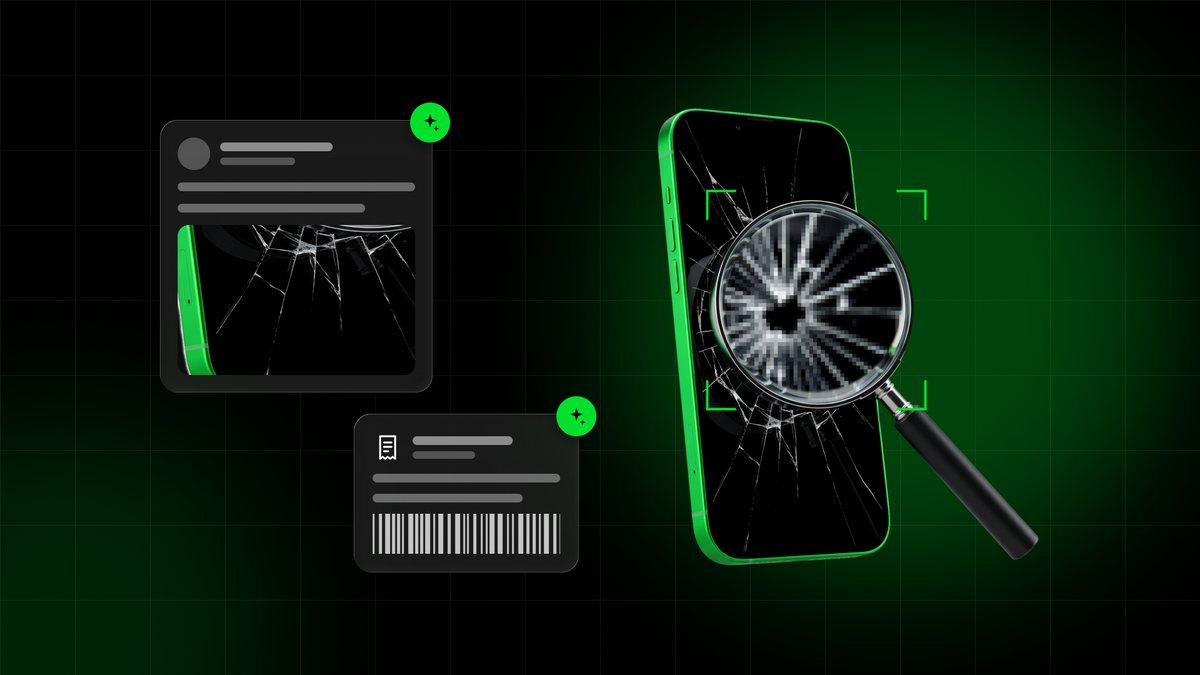
One of the most direct examples of this operational tangibility is the Exchanges, Returns and Warranties app developed by FullComm. This technology complements Shopify's native exchange flow with what Brazil's fiscal and logistical environment requires.
The return tax invoice is issued automatically, and reverse logistics is integrated with the Correios: shipping codes are generated without intervention from your team. This entire flow operates on Shopify's native modules. Your customer requests the return in a user-friendly panel without needing to contact human support, and the FullComm system integrates the refund without friction.
With the invoice issued at the time of return, the tax recovery begins without depending on anyone remembering to issue a document.
Returns with multiple DCs and CNPJs
When the operation has more than one distribution center or uses physical stores as pickup and shipping points, the return stops being an isolated process and starts affecting several systems at the same time. FullComm's OMS & POS Omnichannel, recognized with the Built for Shopify seal, keeps everything synchronized: a cancellation made in the store also applies to the ERP, the carrier, and the inventory, and each step happens only once, without a duplicate order or double invoice.
In physical stores, exchanges and returns are resolved at the counter itself, from start to finish. And, if the same order involved more than one store, each one receives its share of the value automatically, without manual calculation. The inventory displayed on the website continues to reflect what actually exists in each store and DC, even with products going back and forth.
Prevention: clear deadline and shipping already in the cart
Part of returns are born before the purchase: a deadline that is not met, shipping that surprises, or an address with an error. FullComm's Intelligent Shipping Calculation acts on these three points. It quotes up to 14 carriers at once, starting from the distribution center that will actually ship the order, and shows the deadline already in the shipping name, adding the picking days. The customer knows when they will receive it before paying.
Before shipping, the address is reviewed, which reduces orders that return due to delivery errors. After shipping, the tracking is automatically updated on the order (for shipments via Correios with a contract), and the customer follows every step without needing to contact support.
Predictable after-sales, protected margin
Together, these apps take the return out of improvisation. The invoice is issued automatically, the inventory reflects what exists in each store and DC, and the customer follows everything without needing to contact support.
Many people implement online stores. Few prepare the architecture, intelligence, and integrations that support the operation after the sale. Check Commerce is the layer that orchestrates online retail on Shopify: it assumes the technological structure of your store and takes care of the continuous evolution of the tools, so that you maintain control over growth.
Less friction in reverse logistics means less idle working capital and more margin for you to sell.
Frequently Asked Questions
What is reverse logistics in e-commerce?
It is the return path of the product, from the customer's home to the store or distribution center, in cases of exchange, return, or warranty. It includes shipping, transport, return to inventory, and issuance of the tax document.
What changes in returns with split payment?
The tax starts to be separated at the time of payment. In a return, this value returns to the company, but the recovery only begins when there is a return tax document and can take from a few days to a settlement cycle. The implementation will be gradual starting in 2027.
How to issue a return tax invoice automatically on Shopify?
The issuance of a tax invoice in the Brazilian standard depends on an app integrated with the store. FullComm's Exchanges, Returns and Warranties issues the return invoice automatically and generates the reverse shipping via Correios, within the native Shopify flow.