

The ease of management and speed of deployment of a Shopify Plus store compared to other enterprise platforms have created an inflated expectation regarding other aspects of a project: integrations.
Many believe that integrating Shopify Plus with large companies' legacy systems is an easy task… until they face reality. What seems like a “plug and play” quickly turns into a highly complex project, with challenges that, when underestimated, can substantially increase costs.
At Check Commerce, we have seen this firsthand in several implementations for large retailers in Brazil. Shopify offers all the tools to operate at a high level, but success depends on a well-planned integration — and the right partner.
The real challenges of integrations for large companies
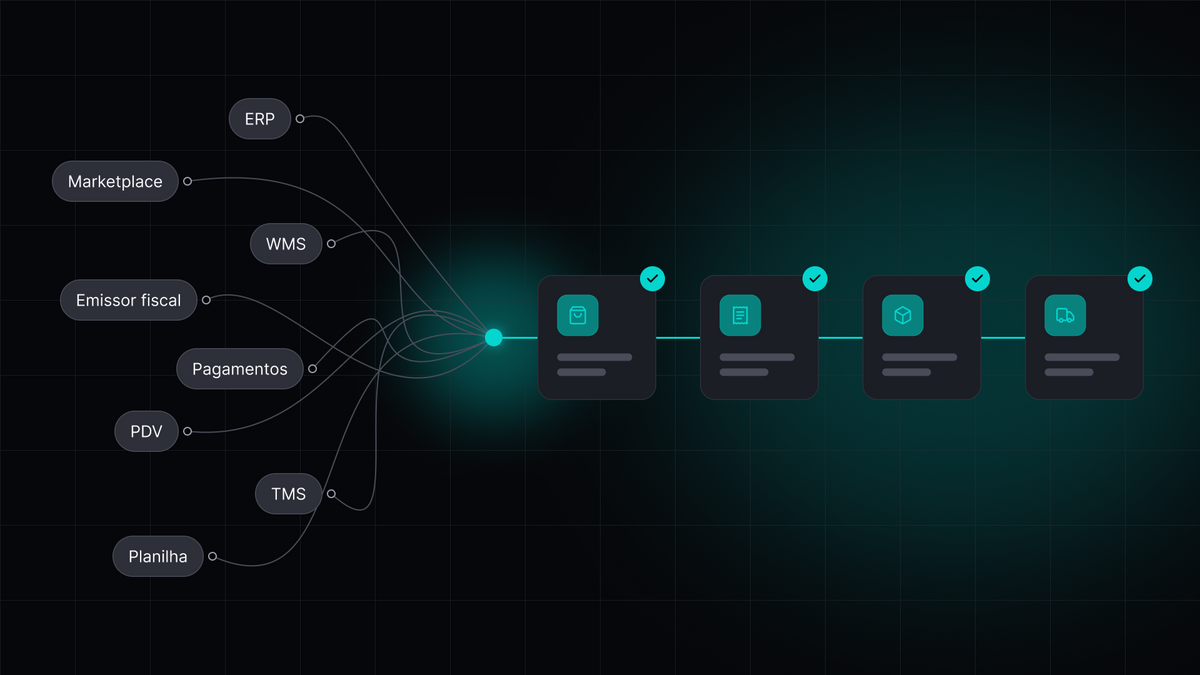
🚧 ERP and WMS are still barriers: In Brazilian retail, the most used management systems were designed for a pre-digital era. Many of these systems still integrate via FTP, XML, or direct database connections, making integration with a modern infrastructure like Shopify's difficult. Without efficient middleware and a robust architecture, operations suffer from delays and failures that affect the customer experience.
💡 An ERP classic: A company uses an ERP built in the 1990s that did not offer a modern API for real-time synchronization of orders, customers, inventory, and prices. To solve this, the company's IT team developed a Webservice, and through OMS FullComm - a solution natively integrated with Shopify - , the SOAP and REST APIs were converted to GraphQL, which is the protocol recommended by Shopify, ensuring seamless updates.
💡 A WMS classic: A company uses a robust WMS with all the features to optimize its warehouses, but to integrate orders, it needs to consume files in an FTP directory, a technology created over 50 years ago. To solve this, the product team at FullComm developed a service that connects via FTP, reads and saves files in the directory, according to the system's standards, however consuming 15x more server resources than the REST protocol.
What we have learned from these projects
📌 Retail is in trouble: A large part of Brazilian retail operates in an intentionally closed outdated ecosystem (without naming names), which in recent years has not delivered solutions and features at the speed the market demands, creating complexity and additional costs.
📌 Poorly done integrations: The lack of knowledge about APIs, Flow workflows - the platform's process automation solution - and Shopify features causes orders not to be processed correctly, deliveries not to be tracked, and the most modern platform in the world to be underutilized.
📌 Shopify meets all demands, but the right partner makes the difference: The platform offers robust solutions that meet Brazilian retail needs, but without a well-planned integration strategy, operational challenges can multiply quickly.
📌 Updating legacy systems is essential: Companies that want to offer a modern shopping experience need to modernize their back-end. It is not enough to change the e-commerce interface if internal systems still operate with outdated processes.
📌 With Shopify's expansion in Brazil, the ecosystem for large companies is evolving and maturing: There are many excellent agencies for SMEs, but the complexity of enterprise projects migrating to Shopify requires real experience in system architecture and technology integration.
If you are thinking about migrating to Shopify, have a partner as solid as your planning
At Check Commerce, we are specialists in complex projects for large companies, ensuring that the migration to Shopify Plus is not just a platform switch, but a true digital evolution.
Want to take your commerce stack to the next level, reducing operational costs, increasing autonomy and team productivity? Let's talk. 🚀