

Since the COVID-19 outbreak, China has seen empty streets and deserted shopping malls. It was a preview of what would arrive in Europe and even Brazil. In addition to the widespread dissemination of information about symptoms, prevention, transmission, and treatment, there is intense discussion (online) about how to buy supplies, how to use medical services, and how people will earn money. It is worth remembering that Alibaba and JD.com grew significantly during the SARS crisis in 2002 and 2003. Years later, the Chinese giants have the technology and infrastructure.
Fortunately, the outbreak did not start in Brazil, because even with all the lessons learned from China, we will still suffer. But if there is a way to overcome the social and commercial disruptions of the pandemic, it is digital technology, especially e-commerce. It is clear that retail will suffer from the restrictions, including online retail, with the exception of items related to health, hygiene, and cleaning. According to a study by Ebit|Nielsen, a sharp drop (20%) in sales was observed from February to all categories, compared to January.
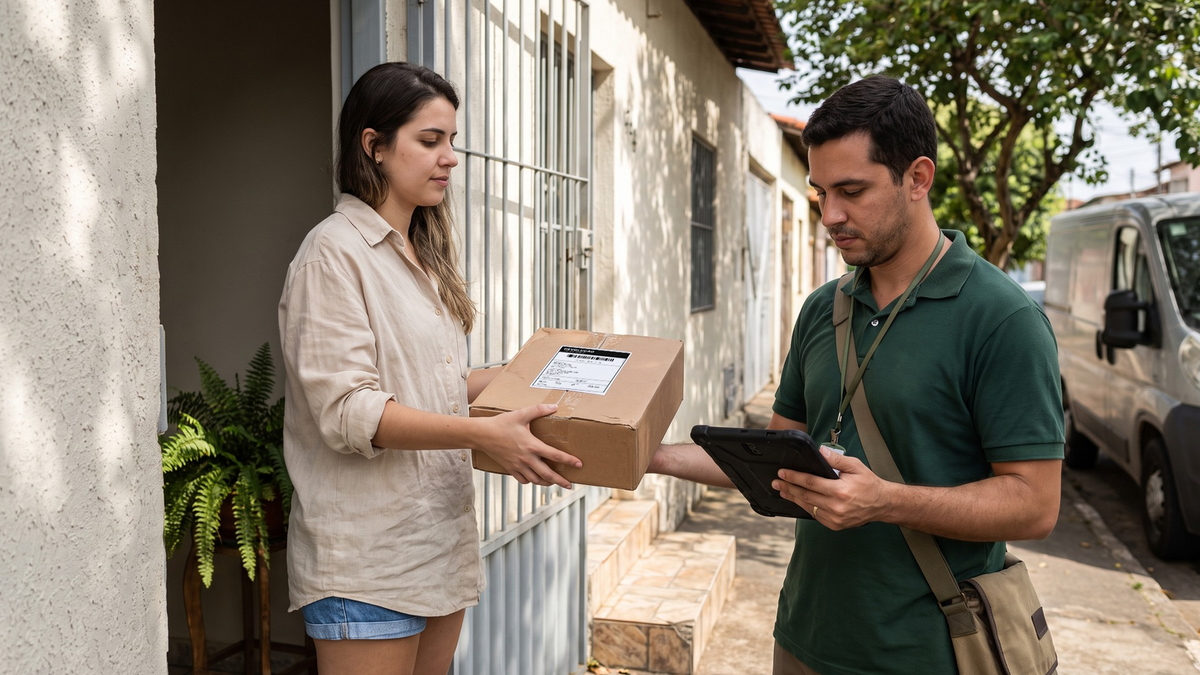
In China, the lockdown (lockdown used by the international media) caused panic among the population and triggered empty supermarket shelves and large crowds! However, within a few days, supplies began to flow, and an adjustment in the supply chain was enough to keep the population supplied. Deliveries have kept cities supplied, preventing people from having to leave their homes to buy basic items. In the same way as Brazil, only with an inferior logistics system to China's.
Good news
Rapid diagnosis
The Curitiba-based startup Hilab, which developed a laboratory device that offers remote testing anywhere, with results ready in just a few minutes, announced that it has developed a rapid test for coronavirus, which provides results in approximately 10 minutes.
- If you have a company and want to test your employees: hilab.com.br/coronavirus-lp
- If you own a pharmacy, offer it at your establishment: hilab.com.br/contrate-o-hilab
- If you are an individual who wants to take the test: fazumhilab.com.br/novo-coronavirus
Treatment
U.S. President Donald Trump shared a chart on Twitter this Saturday (21) from a study showing the success of a treatment combining hydroxychloroquine and azithromycin against the new coronavirus. The pharmaceutical company EMS, in partnership with Albert Einstein Hospital, is expected to begin coronavirus drug trials in the country. Clinical studies will attest to the efficacy of the drug hydroxychloroquine in treating COVID-19. The pharmaceutical company produces this medicine in the country, and it is indicated for the treatment of lupus and malaria.
The start of the trials depends on permission from the National Ethics and Research Commission (Conep), an agency linked to the National Health Council.
Covid-commerce
Many companies in the food industry are diversifying activities or redirecting budgets in response to the crisis. Even non-essentials like fashion and luxury have innovated during the crisis. See how China, the U.S., Europe, and Brazil responded:
Catastrophe in Europe
- Europe is behind Brazil in terms of delivery, even with large companies building their own delivery structures, consumer demand is too low to justify major market investments;
- The infrastructure of old cities is very inadequate for space and the movement of goods, and European labor laws prevent the formation of a network of independent delivery drivers to meet a peak in demand;
- With the current national shutdown in Italy, shipping companies cannot deliver shipments to families within quarantined cities; companies quickly implemented systems to check whether a specific delivery is possible or not;
- Les Petits Joueurs, an Italian luxury bag and shoe brand, launched a complete virtual showroom with Augmented Reality (AR) options to try on all products.
U.S. falling short
- Although U.S. consumers are more than ready to buy on Amazon with their accounts, cards, addresses, and virtual wallets, only 16% of total sales in 2019 were online – a figure China reached four years earlier;
- Groceries and ready-to-eat foods continue to be difficult categories for the digital world, despite efforts by Walmart.com and Amazon, which recently bought Whole Foods. It is not that the technology is inferior; U.S. consumers have been much slower than the Chinese in digital transformation;
- Last-mile logistics for supermarkets have not yet reached the standards seen in China's major cities. Even in the restaurant sector, companies like Uber Eats are far behind Meituan, Swiggy, Ele.me, and many other similar services in China.
China putting on a show
- In China's major cities, groceries and other items bought online are delivered to homes within 20 minutes of purchase. Cainiao, for example, manages the supply chain of thousands of retailers and creates a unified inventory that connects the online and offline worlds, where retailers can extend their distribution network and connect to other channels;
- To avoid circulating in places with a high risk of transmission, consumers migrated to e-commerce with longer delivery times;
- Super Apps are making it easier for small retailers to sell any type of product online, offering a complete payment, logistics, and customer service infrastructure. 71% of Chinese consumers make online transactions, mainly through smartphone apps (80% of e-commerce transactions);
- In gated communities and neighborhoods that characterize Beijing, for example, residents organized small groups of volunteers through group chat apps to receive supplies at the community gate, box them for each house, and deliver them to people's doors;
- Meituan Dianping reported that sales of raw foods, such as vegetables, meat, and seafood, tripled. Ele.me, part of the Alibaba Group, also saw grocery orders nearly double, and JD stated that sales nearly quadrupled;
- Due to flexibility in labor laws, hotels, restaurants, and cinemas are sharing their employees with companies that needed labor for order distribution, such as Hema (an Alibaba online supermarket), Ele.me, Meituan, 7Fresh, and JD;
- One of China's largest underwear and lingerie companies shifted its focus to selling on WeChat. They involved all employees by creating a sales ranking, including the CEO.
Brazil between mistakes and successes
- Several Brazilian states are issuing orders to close Post Office branches and operations to contain the spread of coronavirus. The Post Office appealed to the Supreme Court, claiming it is an essential service, but the decisions and impacts are still unknown in uncertain times like the ones we are currently living through;
- Supermarket chains that do not sell online have never been so regretful. Online supermarket transactions are up 180% according to a survey by the Brazilian E-Commerce Association (ABComm) and are expected to remain high for a long time;
- An Ebit Nielsen study points out that the hand sanitizer category reached 9% of the total Health revenue in e-commerce on the 16th of this month. Traditionally, the product does not even reach 1% of the sector's online sales;
- There was an increase in the volume of online purchases of products such as thermometers (45%) and disinfectants (14%). Together, the categories obtained a total revenue of approximately R$ 1.6 million. Diapers (26%), baby food (51%), and wet wipes (10%) also stood out in sales growth in February compared to January, according to Ebit|Nielsen;
- In food, meanwhile, there was a 10% increase in online purchases of canned and preserved foods – reaching a total value of R$ 1.5 million in February.
What are the e-commerce giants doing?
Amazon
Even before an employee at an Amazon logistics plant was diagnosed with the new coronavirus, the company had already issued a statement with all the actions the company would be taking to maintain deliveries, the health of its employees and customers. Amazon will have a major responsibility during this lockdown period to ensure the supply of food, medicine, and hygiene, not to mention the flow of other products.
Shopify
The world's largest e-commerce platform, Shopify, is taking measures to support small businesses during this time of crisis. A fund of almost 1 billion reais was created to support small businesses. New stores will have 90 days of free testing, instead of just 14. The tool to sell gift cards is available on all plans to help local businesses. Local delivery features, allowing small merchants to offer local delivery in their community. And a lot of online content, every week a webinar schedule to help small businesses face this period, see all content at this link: www.shopify.com/covid19
The World Health Organization received lifetime free access to Facebook's paid advertising space. With high impact to disseminate prevention information, news, and official statements, the WHO also began using the resource to combat Fake News. With Facebook's attitude, the agency was able to reduce the risks of panic and biased information through a technological resource.
Google made free access available to its video conferencing platform: Hangouts Meets. With free Enterprise access provided, users could start video calls with up to 250 participants and conduct live broadcasts with support for 100 thousand viewers.
iFood
iFood created a R$ 50 million fund for restaurants in the midst of the pandemic, with shorter disbursements and other measures to encourage its own chain. It also created another R$ 1 million fund for employees in quarantine, in addition to starting contactless delivery tests.

What are we learning from the crisis?
- Those who were already prepared benefited, as they will have a smaller negative impact than companies that lost their only sales channel. With an active online store, it was possible to direct their customers to the other channel;
- Brazil still has few cities with an efficient and digitally connected local delivery structure, which harmed the operation of online stores that depend solely on the Post Office to deliver their goods;
- E-commerce has been present in our lives for decades, but the vast majority of retailers who were harmed by the lockdown do not have an online store to continue serving their customers; Many restaurants, due to having a simpler operation, started selling through apps and social media, bringing convenience to their loyal customers;
- It is during a pandemic or a deep economic crisis that creativity generates new businesses, new ideas, and new ways of thinking. Governments realized the advantages of an integrated logistics system with an e-commerce network to supply the population and emergency cases;
- E-commerce is the only alternative.
COVID-19 is a warning. It is clear that to overcome critical situations more easily, it will be necessary to accelerate the digital transformation of economies and improve the logistics infrastructure.
Sources:
https://hbr.org/2020/03/delivery-technology-is-keeping-chinese-cities-afloat-through-coronavirus
Seven Chinese ecommerce companies you should know about (other than Alibaba and JD.com)
IFood creates a R$ 50 million fund for restaurants amid the pandemic
https://edited.com/resources/the-5-strategies-retailers-should-adopt-to-combat-coronavirus
Coronavirus impact: online supermarket transactions rise by 180%
https://www.scmp.com/tech/apps-social/article/3049520/some-chinese-tech-companies-see-surge-customers-amid-coronavirus
Workers sent home after Amazon warehouse employee tests positive for COVID-19
Solidarity Initiatives: 8 companies that set an example in the face of the Coronavirus Outbreak
https://noticias.r7.com/saude/coronavirus-trump-divulga-estudo-que-mostra-sucesso-de-tratamento-21032020
https://valor.globo.com/empresas/noticia/2020/03/20/ems-inicia-testes-de-medicamento-para-o-tratamento-da-covid-19.ghtml
In the world of online slots, gacor slot is a trending term widely searched by players. This term describes slot machines that frequently provide wins or jackpots. The simple way to play combined with the buzz of easy wins makes it a favorite among slot lovers. By using advanced algorithms, gacor slot offers an exciting and challenging gaming experience. For players who are just trying it out, this is the gateway to getting acquainted with an enjoyable and profitable gaming sensation.
If you want to try it out and experience the thrill firsthand, you can find more information at gacor slot. In addition to the exciting gameplay, gacor slot also offers cool graphics with a variety of themes. All of this is supported by a high return to player (RTP) mechanism, which means your chances of winning are even greater. Both slot gambling veterans and newbies should definitely try this hyped-up trend. So, head over to the website now and experience this incredible excitement for yourself!