

Black Friday 2026 will be different from all the previous ones. For the first time, we will have artificial intelligence agents truly participating in the shopping journey, helping customers discover products, compare alternatives, monitor prices, evaluate offers, and decide where to buy. Something unprecedented.
This significantly changes the logic of e-commerce. Until now, practically the entire digital experience was built assuming that the person who researches, browses, interprets information, and makes the decision is a human.
Now there is a new layer between the consumer and the store.
A consumer could ask an AI to find the best laptop up to R$ 5,000, compare three models, check if the Black Friday discount is really good, or monitor the price of a product until an interesting opportunity appears. The process of comparing and checking price history has become MUCH easier.
They could also ask something much less objective, such as: “I want a gift for my wife up to R$ 800, but I don’t know exactly what to buy.” The agent will have to interpret the intent, research alternatives, compare products, and recommend what seems to make the most sense.
In other words, even before the consumer accesses a store, an artificial intelligence could determine which products deserve to be included in the comparison.
E-commerce was built only for people
We created menus, filters, product pages, campaigns, showcases, content, and experiences thinking about how a person browses. Even a large part of SEO initiatives was built to lead a human to a page.
An AI agent sees this commerce in a different way. It needs to understand the product, its attributes, its variants, price, stock, delivery time, compatibility, policies, and usage context.
A store can have a fantastic design and still be difficult for an artificial intelligence to understand.
This is a new problem.
Imagine two stores selling similar products. The first has incredible photos, impeccable branding, and a very well-designed PDP, but much of the important information is hidden in texts, images, or disconnected systems.
The second has well-structured attributes, organized variants, and clear information about availability, compatibility, delivery, and usage.
For a consumer, the first one might seem better. For an agent trying to answer a specific question, the second one may be much easier to understand.
And this begins to directly affect the possibility of a brand being recommended.
Shopify is already building this infrastructure
This is not a discussion about a distant future. Shopify is already preparing its platform for Agentic Commerce, with initiatives such as Storefront MCP, Global Catalog MCP, and WebMCP.
Global Catalog MCP, for example, allows agents to search and compare products across different Shopify stores. This means the agent does not necessarily need to start its journey inside a specific store: it can start by looking for the best product for a given need in the Shopify catalog.
WebMCP follows the same direction. The idea is to allow websites to offer structured tools for agents, making it possible to search for products, consult information, and perform actions without relying on the same navigation created for humans.
The infrastructure is being built rapidly. The problem is that having a Shopify prepared for agents does not mean that the merchant's operation is prepared.
The new competition begins before the click
We are used to thinking about the funnel starting from the visit. Traffic, session, product page, cart, checkout, and conversion. With agents, an important part of this journey can happen before any session exists.
An AI can find twenty products, eliminate fifteen, compare five, and recommend three. Only after that can the consumer reach a store.
This means that a product can lose a sale without the consumer even visiting the site.
No checkout improvement solves this problem. No CRO test can recover a product that never even entered the comparison.
Therefore, perhaps the most important competition in Agentic Commerce is not initially at the checkout, but in discovery and recommendation.
Data presented by 40rty.ai indicates that approximately 62% of the AI usage observed in the shopping journey happens during product comparison, while only 23% is related to checkout.
And Black Friday makes this even more relevant
Black Friday adds an important variable because price, stock, promotion, and delivery time change all the time.
A consumer could ask an AI to monitor a certain product for a few days, compare the current price with the history, identify if a promotion is really good, or eliminate stores that cannot deliver within the desired timeframe.
This makes information that previously seemed operational now directly participate in the purchase decision.
Price stops being just what appears on the page. Stock stops being just availability information. Logistics stops being a problem presented after the consumer has chosen the product.
For an agent, all this information can be filters used before the recommendation.
If the company cannot make it available clearly, consistently, and updated, it may simply be left out of the answer.
The first numbers already draw attention
It is still early, and the volume of traffic originating from agents continues to be small. But some signs are already interesting.
In a case released by 40rty.ai, agents represented only 0.41% of the traffic of an operation for 77 days, but were responsible for 3.99% of the orders. The average ticket of this traffic was also higher, US$ 110 versus US$ 96 of the store average.
It is not possible to conclude from this that all agentic traffic will convert ten times more. But there is a very logical hypothesis for this behavior.
When a person reaches a store after asking an AI to find the most suitable product, part of the discovery, comparison, and consideration may have already happened.
The consumer arrives more qualified and, possibly, closer to the decision.
Shopify Ready does not mean AI Ready
Shopify can offer the agent a way to search the catalog, but it cannot guarantee that the merchant's data is correctly structured.
It can make product information available, but it cannot create attributes that do not exist. It can expose policies, but it cannot guarantee that they are complete, updated, and consistent.
It can also create tools for cart and checkout, but it does not know all the particularities of each operation.
This is exactly where the difference between a platform prepared for agents and a company prepared for agents appears.
We call this AI Readiness.
AI Readiness is not SEO for ChatGPT
It is important to make this distinction.
AI Readiness is not simply changing product descriptions to try to appear better in a ChatGPT answer. It is also not installing an app, adding a chatbot, or creating more content using artificial intelligence.
We are talking about commerce architecture.
At Check Commerce, we analyze catalog, taxonomy, attributes, metafields, metaobjects, variants, price, stock, promotions, logistics, content, policies, FAQs, integrations, search, merchandising, and the interfaces that allow agents to interact with this environment.
The question we want to answer is very simple: can an artificial intelligence correctly understand how your company sells?
Every business has different knowledge
A fashion store needs to explain size, fit, and occasion. A furniture store needs to help someone understand dimensions, environments, and combinations.
A supermarket needs to deal with regional availability, substitution, and variable weight. A construction materials store needs to answer questions about compatibility and the quantity needed for a given construction.
A beauty company needs to be able to explain to whom a certain product is indicated. An auto parts operation needs to know if a certain item is compatible with a certain vehicle.
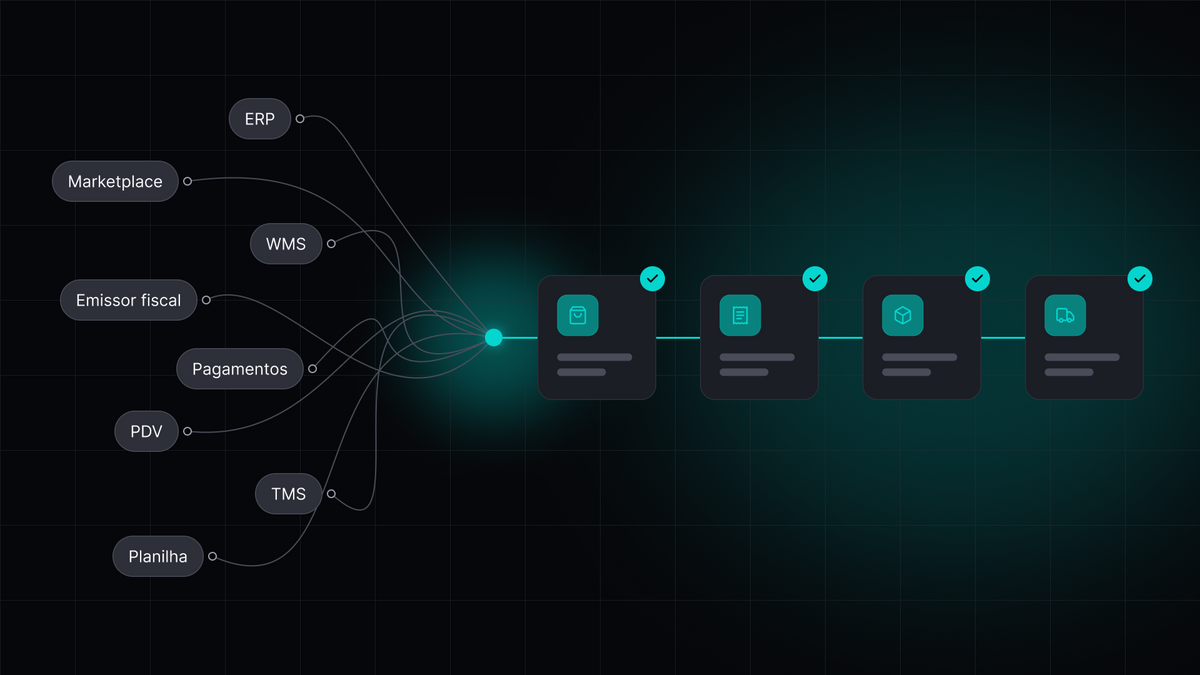
This information usually already exists within companies, but it is scattered among ERPs, spreadsheets, apps, texts, integrations, business rules, and team knowledge.
Preparing an operation for agents involves transforming this knowledge into an architecture that can also be understood and used by artificial intelligence systems.
That is why we created Check Commerce's AI Readiness
Our work begins by trying to answer a question: if an AI agent tried to discover, compare, and buy the products of this company today, where would it encounter difficulties?
From there, we analyze architecture, data, content, integrations, and business rules to identify gaps and organize priorities.
The result is an AI Readiness Map, showing what is already prepared, what needs to be structured, and what capabilities can be built to make the operation more understandable and usable by agents.
We are not trying to prepare companies for a hypothesis about what commerce will be like in ten years.
We are preparing companies for a change that has already begun.
Black Friday 2026 is the first big test
Agents will probably still represent a small portion of sales this Black Friday. But that is not the most important point.
The important thing is that they will be inside the shopping journey, discovering products, comparing alternatives, monitoring prices, evaluating offers, checking delivery time, and helping consumers decide.
For the first time, it may not be enough to convince only the person who wants to buy.
The company will also have to be understood by the artificial intelligence that is helping that person choose.
Black Friday 2026 will be the first one in which humans and agents will buy together. And that changes everything.
Is your operation ready? Then talk to Check.