

Just a few days ago, we commented here on how Shopify opened a new interface in the store, made not for people, but for AI agents to operate navigation. That text dealt with what changed at the entrance. This deals with what happens to your margin when the customer starts coming through it.
For twenty years, e-commerce was designed to convince a person. The product photo, the well-written description, the free shipping badge, the social proof right below the buy button. All this exists because on the other side there was someone reading, feeling, and deciding. This premise is losing its same form. And, contrary to what is usually imagined, Brazil is not lagging in this conversation. In some points, it is ahead.
The Brazilian consumer has already decided. And they are ahead of the American.
A global study by Visa, the Agentic Commerce Consumer Study, conducted with 4,000 consumers in four countries, showed a data point that usually surprises those who think the topic is something from abroad: 76% of Brazilians intend to use AI agents to shop. In the United States, this number is 44%.
And it is not just intention. When the conversation turns to trust, the Brazilian also appears ahead: they say they are more comfortable letting an agent buy on their behalf, and more in control of the journey even delegating the decision, than the American consumer or the one from Singapore.
The reason for this lead is no mystery. Brazil has a history of rapid adoption in payments, from internet banking to Pix. The consumer here has proven, more than once, that they embrace the next leap before the world average. Agentic commerce is the next leap, and they are already comfortable with the idea.
The infrastructure has also already left the drawing board
This is not an opinion poll about a distant future. The track is being laid. In early 2026, an AI agent searched, compared, and concluded the country's first agentic purchase alone, within the limits defined by the customer, with tokenization and real-time risk analysis. Right after, major banks and acquirers entered the first phase of the program that approves this type of transaction here.
On the platform side where your store probably runs, the movement is the same, and we already detailed this in the previous post about Shopify's support for WebMCP. Consumer ready. Payment method approved. Platform preparing. One piece is missing from this equation, and it is precisely the one that depends on you.
The mismatch that opens the window
Here is the paradox. While the Brazilian consumer runs ahead of the world to buy through an agent, most operations have barely begun to prepare to receive this purchase. On one side, the customer most willing on the planet to delegate the decision. On the other, a shelf still designed only for human eyes.
This distance is not a problem, it is a window. And windows close.
The risk no one talks about
When an agent decides the purchase, it does not feel your brand. It does not get excited by your story, it does not notice the care of your page. It extracts structured data and decides by criteria: price, availability, whatever is readable for the machine at that moment.
The problem is that a good part of what differentiates your store is not readable for it. Loyalty program, recurring customer benefit, flexible exchange policy, the gift from that order band. None of this usually appears as data that the agent can read. What is left for it to see is the discount. And not just your official discount: the agent also accepts a leaked coupon, an expired code, a promotion that was never meant to circulate. Faced with this, it pulls the lowest price it finds.
Translating this into the language that matters in your operation: if you do not organize what the agent sees, it will put you to compete on price. And competing on price is the shortest path to erode the margin you took years to build. With the Brazilian consumer entering this model faster than the rest of the world, the cost of arriving unprepared also arrives earlier here.
The solution is not a new site. It is control over the data.
There is a relief in this story: the answer is not to tear up what exists and start over. The agent buys in the store it can read. The adjustment is in the data, not in a replatform.
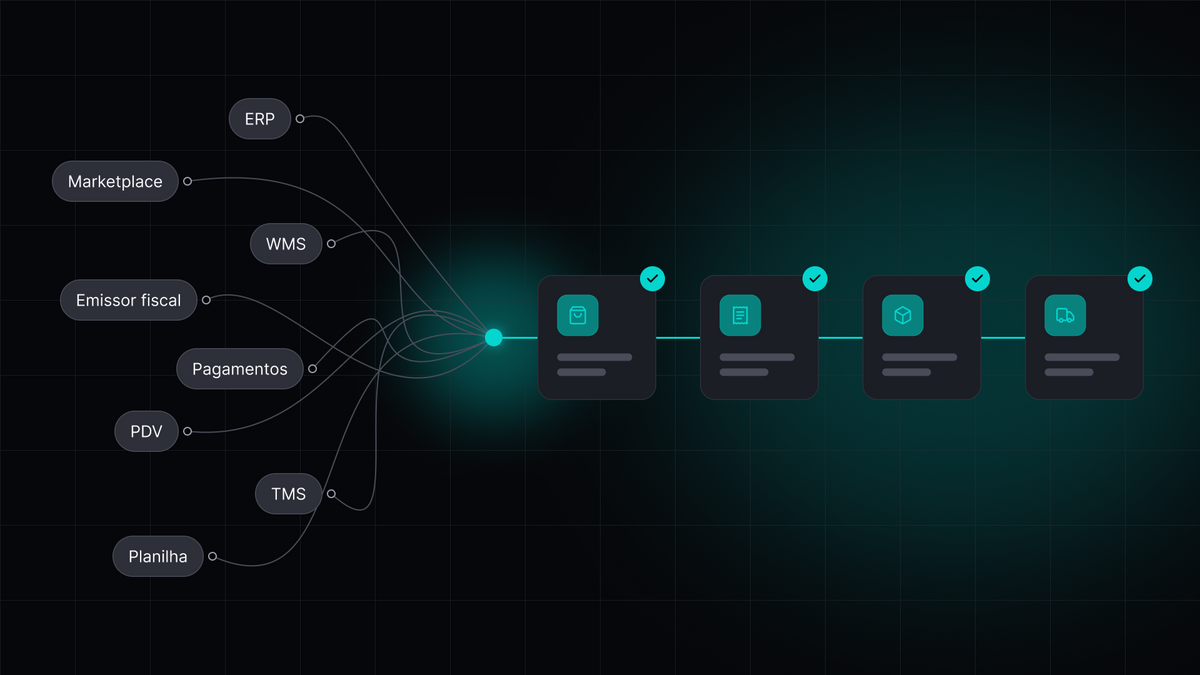
Complete product sheet. Structured data in the standard the machine understands. Consistent stock and price across all channels, without the page saying one thing and the marketplace another. And, above all, what makes your brand worth more than the price, loyalty, benefit, recurrence, exposed in a way that the agent can weigh it when deciding. When these fundamentals are in place, connecting the store to agentic commerce becomes an integration, not a reconstruction.
It is missing to bring this to your operation
Shopify paves the foundation abroad, continuously, for a phase of commerce that is still taking shape. No one has this scenario fully closed, because it changes every month. It is precisely for this reason that the continuously delivered foundation matters: it allows your store to keep up with the change instead of chasing it.
But what separates a ready store from an unprepared store is no longer just the platform, it is what is done on it. This is where Check's work comes in: taking the structure that Shopify paves and translating it into real control for the Brazilian operation, deciding, from a single point, what your store shows the agent and when. Making it so that, when reading your store, it sees who that customer is and what they already have with your brand, instead of looking only at the lowest number on the screen.
The Brazilian consumer has already said what they came for, and said it louder than the rest of the world. The question that separates those who will grow in this scenario from those who will only react to it is simple: when the next customer of your store arrives through an agent, will they see what your brand has at its best, or just your price?
Who organizes the data today decides the answer.